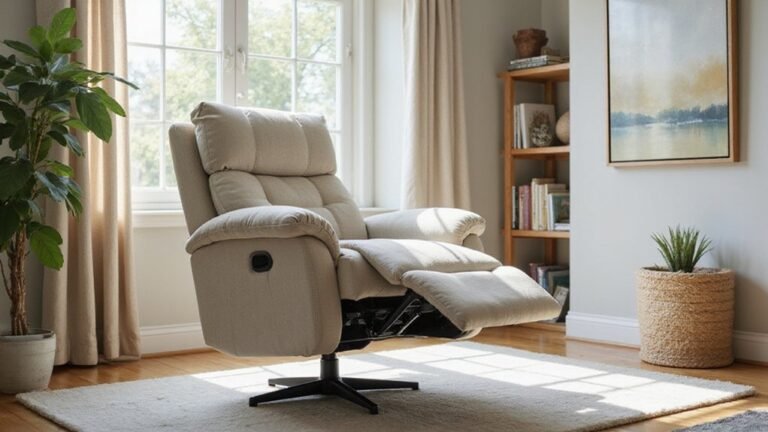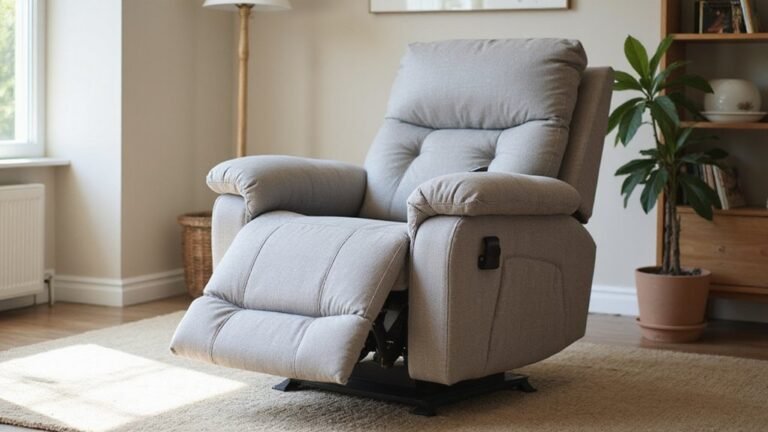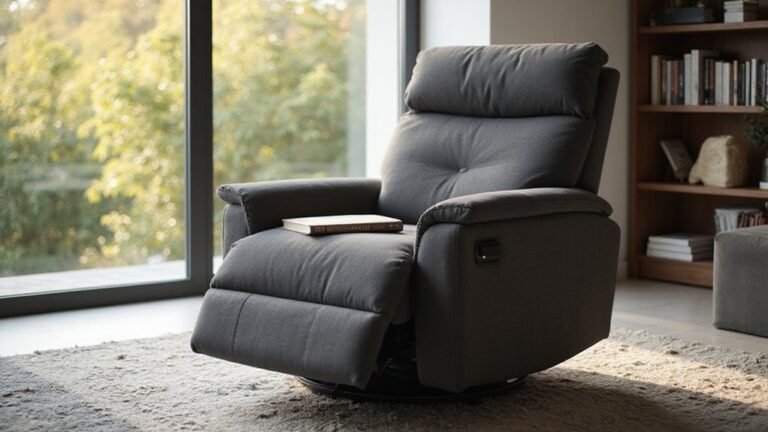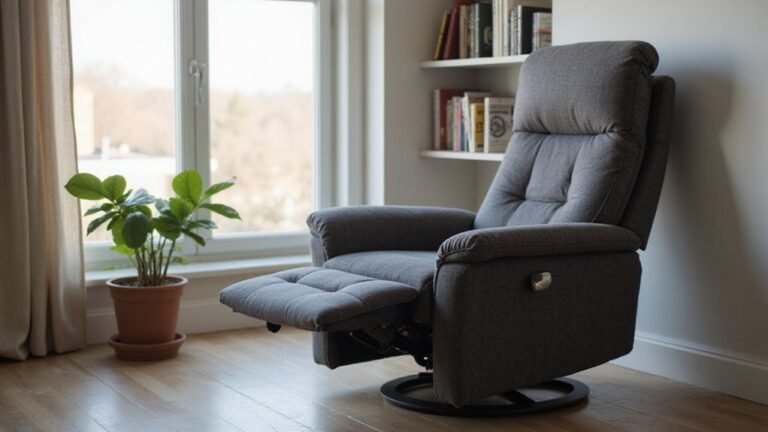
Your recliner can affect your spinal health in opposing ways. While proper reclining at 135 degrees reduces spinal pressure and supports natural vertebral alignment, incorrect usage leads to problematic postural patterns and increased disc pressure. Extended periods of poor positioning can weaken back muscles, disrupt proper spinal curves, and contribute to chronic discomfort. Understanding specific features and proper usage techniques proves essential for protecting your spine’s long-term health.
Understanding the Impact of Recliners on Spinal Health
How can a seemingly comfortable recliner impact your spinal health? While recliner designs may feel relaxing initially, they can greatly disrupt your spinal alignment when used incorrectly. Your spine faces particular stress when you maintain prolonged positions with your head forward, hips fully bent, and knees flexed, as this mimics poor standing posture.
When you recline without proper support, you’re likely to experience increased pressure on your intervertebral discs, potentially leading to bulging or herniation. Your spinal structures bear abnormal loads, especially when your feet aren’t properly supported on the floor or footrest. The combination of slouching and extended static positioning can strain your back muscles, reducing their ability to maintain proper spinal stability and potentially contributing to chronic discomfort.
Many people unknowingly maintain these harmful positions because bad habits feel normal after extended use of recliners.
The Benefits of Reclining for Back Pain Relief
While improper recliner use can strain your spine, correctly positioned reclining offers significant therapeutic benefits for back pain sufferers. When you recline, you’ll experience natural muscle relaxation as the chair supports spinal structures and maintains proper lumbar curve alignment. This position helps decompress your vertebrae and reduces pressure on nerve roots. Power lift chairs can provide additional support for those with limited mobility while maintaining proper spinal alignment. Zero gravity positioning features allow optimal weight distribution across the entire body.
Research from NY Dynamic Neuromuscular Rehabilitation has shown positive therapeutic outcomes for back pain patients using recliners. Recliner comfort extends beyond basic positioning – elevating your legs enhances circulation, which accelerates healing in strained back muscles and reduces inflammation. You’ll find that controlled reclining can effectively manage acute flare-ups and post-surgical recovery by redistributing body weight and minimizing spinal load. The chair’s support system eliminates gaps between your lower back and the seat, preventing misalignment that could exacerbate existing conditions like herniated discs or pinched nerves.

Premium Durable Material: Heavy duty metal frame supports up to 440 lbs for long-lasting use. This zero gravity chair is a top pick for camping, beach trips, poolside lounging, or backyard naps perfect for anyone seeking cozy rest outdoors

【Premium Heated Zero Gravity Chair with Massage Cushion】Experience ultimate relaxation with this heated zero gravity massage chair featuring an extra-thick padded cushion and built-in back massage function. The massage system offers 3 intensity levels for back, while the seat heating function provides soothing warmth with 3 adjustable heat settings for outdoor or indoor comfort(green for low, blue for medium, and red for high)
Hidden Risks of Extended Recliner Use
Despite the therapeutic benefits of reclining, extended periods in a recliner can create significant postural complications that affect your musculoskeletal health. You’ll risk developing head-forward posture, spinal misalignment, and weakened back muscles from prolonged static positioning. Extended use can lead to bulging discs, pinched nerves, and increased joint degeneration. Selecting a recliner based on proper body fit is crucial for preventing these issues. Regular mechanical maintenance can ensure your recliner provides optimal support for your back alignment.
Your circulation may suffer too, as elevated legs can cause blood pooling and raise your risk of deep vein thrombosis. Many recliners offer limited motion range that can contribute to muscle weakness over time. To protect your spine and vascular health, consider recliner alternatives like standing desks or ergonomic chairs for daytime use. If you must use a recliner, implement regular posture adjustments, take movement breaks, and guarantee proper fit to support natural spinal curves. These preventive measures help maintain muscle strength and reduce the likelihood of developing chronic postural issues.

For convenience and durability, we upgraded and lengthened the straps to fit more chairs instead of adding extra extension straps.
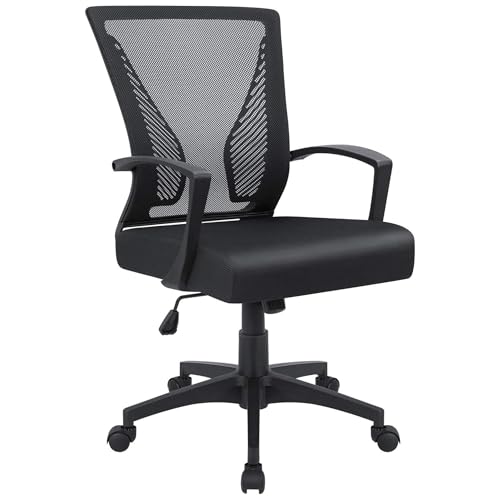
Ergonomic Design: The overall design of this office chair is ergonomic, two lumbar supports on the backside of the chair back are not only for beautiful looking, when you lean in the chair, it feels comfortable like two hands are supporting your waist, with a slightly concave design on the cushion, this chair can effectively relieve the back pain that caused by long hours of sitting, this will be a very wonderful experience for your use

【Adjustable Lumbar Support】GABRYLLY Ergonomic Office Chair features 2-way adjustable lumbar support (3" vertical & 1.6" horizontal) that dynamically conforms to your lower back, reducing fatigue and improving posture during extended sitting. Professionally tested by SGS and BIFMA, this chair supports up to 300lbs with high-grade durability, ensuring long-lasting comfort and safety for all-day productivity.
Key Features to Look for in Back-Friendly Recliners
When choosing a recliner that promotes spinal health, you’ll need to evaluate several critical anatomical support features. Look for adjustable lumbar support that provides at least 2-3 inches of customization to maintain your spine’s natural curvature. The support should be firm and targeted, not soft and compressible. Quality recliners with therapeutic benefits typically cost between $800 and $4,000.
Your recliner should offer multiple recline angles between 90° and 180° with secure locking positions to prevent unwanted movement. Zero-gravity positioning can help decompress your spine by elevating your legs above heart level. Consider models with independent headrest adjustment to maintain proper cervical alignment. Rocker recliners provide gentle motion that can help reduce back tension while seated.
For therapeutic benefits, seek features like targeted massage and heat therapy that can reduce muscle tension and promote circulation. Power lift mechanisms can further protect your spine by assisting with sit-to-stand shifts.

【Full-Back Ergonomic Support】 Designed specifically for recliner chairs, this extra-long lumbar pillow provides complete support from your lower back to upper spine. Its contoured shape closely follows the natural curve of your body, offering targeted relief and promoting healthy sitting posture—ideal for long hours in recliners, armchairs, or sofas.

Adjustable Side Bolster – Our set includes a movable mini pillow attached with strong Velcro straps. Filled with high-density 25D sponge, this bolster delivers firmer, more resilient support.

Back Pain Support: This lumbar support pillow with strap helps ensure proper spine alignment and sitting posture while helping treat and prevent low back pain.
How Sleeping in Recliners Affects Your Back
Although sleeping in recliners can provide temporary relief for certain back conditions, the long-term effects on spinal health remain complex and variable. While recliner ergonomics in neutral positions can support your spine’s natural curve and reduce joint stress, prolonged sleeping in these chairs may disrupt proper spinal alignment and restrict natural movement patterns.
You’ll find that sleep positions in recliners can affect multiple aspects of your musculoskeletal health. Using proper lumbar support with pillows is essential to maintain healthy spinal alignment during recliner sleep. The semi-upright position might help with herniated discs and improve breathing, but it can also lead to muscle tightness and joint stiffness due to limited repositioning. Your circulation may suffer from compressed blood vessels in bent knee positions, and the restricted movement can increase your risk of developing muscle knots and chronic pain. The headrest might force your neck forward, potentially causing upper spine strain.
Proper Posture Techniques While Using Recliners
Five essential posture techniques must be mastered to enhance your recliner experience and protect your spinal health. First, align your entire back against the backrest, maintaining your spine’s natural curves through proper recliner ergonomics. Second, position your head with the chin level while using the headrest to support your occipital region. Third, adjust the seating dynamics to a semi-reclined position of approximately 135 degrees to reduce spinal loading. Fourth, make sure your knees maintain a 90-degree angle with fully supported feet to promote circulation. Finally, use the armrests deliberately during entry and exit to prevent muscle strain. Those recovering from hip surgery should ensure hip flexion limits are strictly followed to prevent dislocation risk. When combined, these techniques create ideal pressure distribution across your body while preserving proper spinal alignment and reducing the risk of musculoskeletal stress. Regular stretching and movement while seated helps maintain healthy blood flow and prevents stiffness in muscles and joints. Pregnant individuals should consider left side positioning when reclining for extended periods to optimize blood flow and fetal health.

【 Designed for Comfort 】SUPA MODERN Recliner Pillow is specifically designed for the head and neck, using ergonomic principles to provide unparalleled comfort. Recliner Pillow measures approximately 14.5 inches x 8 inches x 4 inches and is suitable for most people. Whether it's leisurely light on the sofa, focused work time, or sweet dreams at night, recliner headrest pillow can provide excellent support for your neck and head.

【Ergonomic 3D Neck Support】Recliner neck support pillow is crafted with custom molded memory foam, perfect fit the natural curve of your neck. Unlike generic pillows, our headrest pillow wrapping around the sides of your neck to fix your head in place, preventing head tilting during side sleep or reclining.

Comfortable Headrest Pillow: Designed for your comfort. Measuring approximately 23” x 15.7” x 4.3”, it provides excellent neck and head support for travel or daily use. Packaged in a sturdy box, it won't lose shape during transit. Try it for ultimate comfort on long flights or road trips.
Research-Based Evidence on Recliners and Back Health
Scientific research strengthens our understanding of how recliners affect spinal health and posture mechanics. Studies show that reclining at a 135-degree angle reduces spinal compression compared to upright 90-degree sitting. Accelerometer-based research reveals that sitting duration isn’t directly linked to back pain; rather, posture quality and movement patterns play important roles. Quality reclining sofas can provide reliable back support for up to 15 years with proper maintenance. Modern dual motor systems allow precise control of backrest and footrest positions for optimal spinal alignment.
Recliner ergonomics incorporating zero gravity positioning can promote spinal decompression and enhance circulation. When properly designed, recliners support natural spinal alignment and may alleviate chronic back discomfort. However, research emphasizes that static positioning, even in ergonomically optimized recliners, isn’t ideal for long-term back health. Maintaining adjustable lumbar support is crucial for preventing spine misalignment during extended recliner use. You’ll benefit most from dynamic position changes and regular movement breaks, regardless of your recliner’s design features.
Essential Guidelines for Safe Recliner Usage
While comfort remains a priority when using recliners, proper usage techniques are essential for protecting your spinal health. Position yourself at a 135-degree recline angle to optimize spinal pressure distribution, and guarantee your feet rest flat on the floor or footrest to maintain proper alignment. Make recliner adjustments that support your spine’s natural curves, particularly through adequate lumbar support – add a pillow if needed. Taking inspiration from the Arts and Crafts movement, early reclining chairs prioritized both function and comfort through their adjustable designs.
Dual power controls offer precise adjustments for optimal back positioning through independent backrest and footrest motors. Don’t remain seated for extended periods; instead, take regular breaks to stand and stretch. Today’s modern ergonomic recliners provide excellent back support with customizable features to accommodate different body shapes. You’ll need to avoid common mistakes like slouching, hunching forward, or sleeping in your recliner. When selecting a recliner, choose one with adjustable features that accommodate your body’s dimensions and allow for proper ergonomic positioning to prevent strain on your back.

Soft and Breathable: The back cushion is made of high-density and durable memory foam to provide you with proper support and long-lasting comfort. The 4D air-cooled mesh on the lumbar pillow pillowcase provides high-density breathability to keep your back cool and airy.

Ergonomic Design Correct Sitting Posture: Comfier Lumbar Support Pillow adopts ergonomic design better fits the body curve to help relieve fatigue and pain of upper,middle and lower back, support you in achieving right posture, is suitable for office worker,gaming enthusiasts or long-time drivers.

【Relief the Pain】The lumbar support pillow used ergonomic design is adopted to fill the gap between the waist and the bed, fit the curve of the lumbar spine, and effectively relieve the pain caused by the waist, thereby reducing the burden on the back.
Medical Perspectives on Recliners and Spine Care
Recent biomechanical research has established essential findings regarding recliner use and spinal health, with studies from Canada and Scotland revealing that a 135-degree recline position ideally reduces spinal pressure compared to traditional 90-degree upright sitting.
Eight out of ten adults will experience lower back pain throughout their lives, making proper seating choices crucial. While proper seating ergonomics can benefit your spine, you’ll need to take into account specific recliner adjustments to maximize these advantages. Medical specialists emphasize that maintaining natural spinal curvature through adequate lumbar support is vital, as prolonged static positioning can lead to joint stiffness and nerve compression. You shouldn’t use recliners for extended sleeping periods, as this may contribute to musculoskeletal complications. Instead, focus on intermittent movement and position changes while seated. Clinical evidence suggests that ergonomically designed recliners can support spinal health when used according to specialist recommendations, particularly with features that prevent head-forward posture.