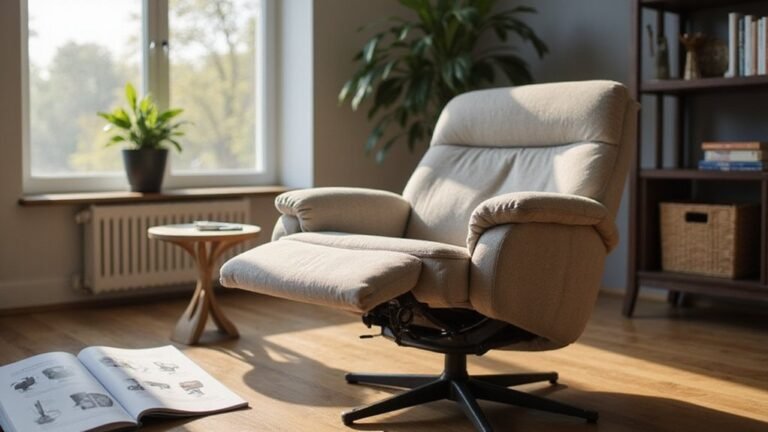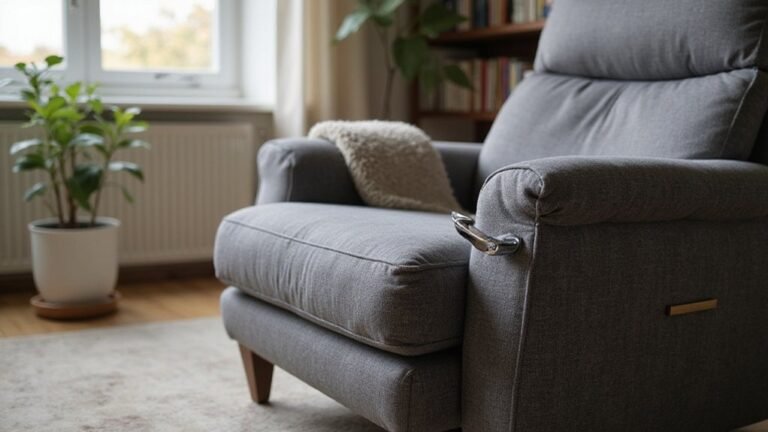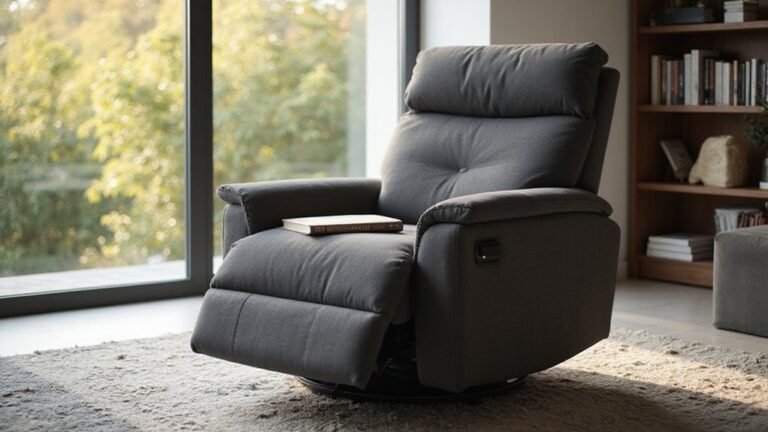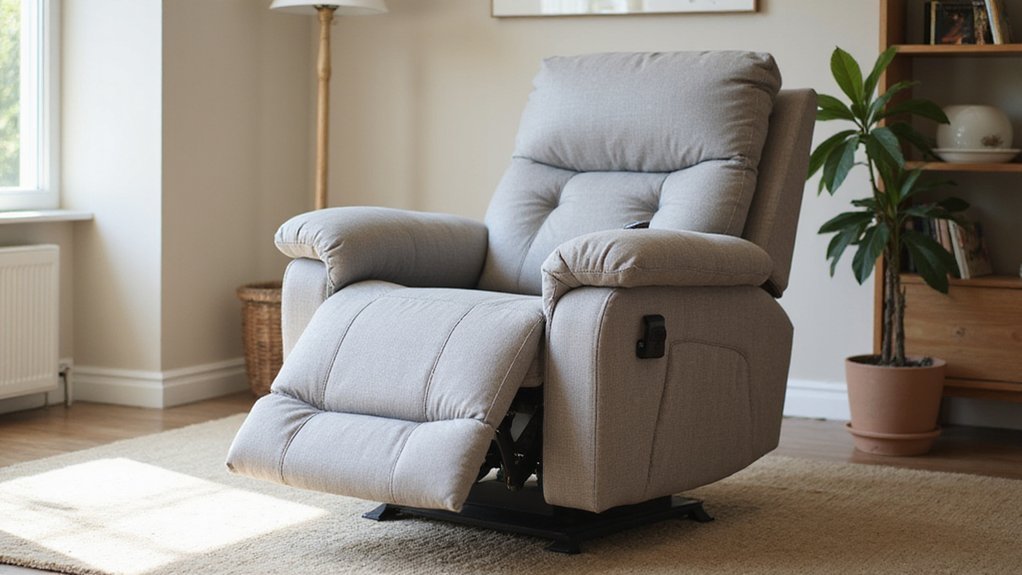
Thinking about making standing easier, but unsure which power lift recliner to choose? These chairs can lift or tilt with just a push, reducing the effort needed to get up.
The right one depends on features like dual motors, safety ratings, size, and comfort. Keep reading to find out how to pick the best fit for your space and needs.
How a Power Lift Recliner Makes Standing Easier
A power lift recliner makes standing easier by using a mechanical tilt that shifts your center of gravity forward and upward over your feet. This controlled motion handles about 80% of the effort needed to stand, reducing the strain on your leg and core muscles. It also keeps you stable as you rise, significantly lowering your risk of falling. You won’t need to push hard with your arms, either. The seat elevates to a height that properly aligns your body, shortening the distance to standing and easing daily efforts. This feature is particularly beneficial for individuals with neurological weaknesses or conditions like Parkinson’s and MS. The smooth motion is powered by an electric motor and gears activated by a simple push-button control. When disassembling such chairs for moving, it is crucial to carefully disconnect the power wiring to prevent damage. When choosing a chair, consider not only its features but also its aesthetic design and the manufacturer’s reputation for reliability, and be sure to protect your investment with regular gentle fabric maintenance to keep it looking its best.

Extended Backrest & Widened Seat: By analyzing the physical characteristics of big people, we have designed a wide electric lift recliner that is most suitable for most elderly Americans. The 30'' extended backrest length and 21'' widened seat width allow you to fully extend your body, this lift chair providing perfect support for the entire hips and legs without cutting off blood circulation. Bring you an ultimate comfortable experience.

POWER LIFT ASSISTANCE: Power lift function could push the entire recliner chair up from its base to help the senior to stand up easily without adding stress to back or knees, Just press the two buttons on the remote control to smoothly adjust the lifting or reclining position(max 160°), The alloy steel frame that has passed the SGS test enables a load-bearing capacity of up to 350lb.

Compatibility: Adapter Parameters of Input: AC 100-240V, 2.5A-4A, 50/60Hz. Output: DC 29V, 2.0A, 58W. The interface features a 2-pin connection (one flat and one round), universal with most models of most recliner chairs, electric sofas, lift chairs and message chairs, also compatible with other devices with a 2-pin connection, like standup desks, lift tables, adjustable bed. When making your selection, please pay attention to the product specifications and interfaces
Key Power Lift Recliner Features to Compare
When comparing power lift recliners, prioritize dual motor systems. These allow independent movement of the backrest and footrest, providing a wider range of positioning options, including therapeutic recline and full lift functions. Look for chairs with multiple massage and heat settings if relaxation is a key goal. Safety features should include a high weight capacity—typically at least 300 pounds—to ensure stability and a reliable battery backup in case of power outages. For comfort, adjustable headrests and lumbar support are essential, as they help customize the seating experience to your needs. Durability depends on high-quality components that operate smoothly and quietly, reducing wear and tear over time, and you should also consider that more complex mechanisms can lead to reduced durability and a shorter lifespan. Understanding basic troubleshooting steps can help you assess a model’s long-term maintenance needs. Controls should be large, easy-to-press buttons or touchscreens that are accessible from a seated position, with programmable memory settings to save preferred positions. Each of these features directly impacts how well the recliner fits into your daily routine and how satisfied you’ll be long-term. Before finalizing your purchase, it is wise to check the chair’s structural integrity just as you would in a DIY restoration project.

Power Lift Assistance: Counter-balanced lift mechanism with a TUV certified actuator pushes the entire chair up to assist the user stand up easily without adding stress to the back or knees, smoothly adjust to the lift or reclining position you prefer by pressing two buttons on the remote control

【8-Point Massage & Lower Back Heating】The Korser massage recliner is designed for everyday comfort. Eight vibrating massage points are strategically positioned on the back, lower back, thighs, and calves. Five massage modes can be freely switched to suit different relaxation needs, from gentle and soothing to deep relaxation. Combined with a soothing lower back heating function, it promotes blood circulation, relieves muscle tension, and reduces fatigue after a long day.

26" extra-wide seat & Flip Arm Storage: Our oversized recliner chair has a roomy, comfortable 26" seat that is suitable for a wide range of people, especially tall men, adults and the elderly. The power lift recliner with arm storage for easy access and use of your stuff, which can be used to put things to save space.
Find the Right Size and Fit for Your Space
To ensure your recliner fits both you and your space, start by considering key measurements. Seat height should be such that your feet rest flat on the floor, with your knees aligned to support proper ergonomic posture. A typical seat height ranges from 16 to 20 inches, depending on your height. Seat depth must support your full thigh without cutting off circulation—measure from the back of your buttocks to just behind your knees. The chair’s width should comfortably accommodate your hips with about 1 to 2 inches of clearance on each side. For an optimal fit, also measure the armrest height while seated to ensure your shoulders remain relaxed.
Also, verify the back height; it should reach the base of your head to provide adequate support. Once you’ve found the perfect fit, maintaining its appearance is easy with a machine washable chair cover that can be securely installed to keep your recliner looking new. Measure your space to ensure there is enough clearance for the recline mechanism, which generally requires up to 21 inches from the wall. Check that when fully reclined, the chair’s length fits comfortably within your room without blocking walkways. Taking accurate measurements and comparing them carefully will help you select a recliner that offers both comfort and seamless integration into your space. Should you encounter issues with the recline function over time, you can often address them yourself by following a guide for fixing broken recliner springs.

New Global 2-Prong 29V AC / DC Adapter Compatible with Okin Refined Model No.: W75RA07-290030 Version No.: JLDP.10.012.000 Batch No.: P15090249RSC48551509 Shenzhen RBD Technology Corporation For Electric Adjustable Bed Lift Chair or Power Recliner DC29V 2A 3A 29.0V 2.0A 3.0A 29VDC 2000mA 3000mA DC29.0V 29.0VDC 29 V 29.0 VDC Class 2 Transformer Power Unit Switching Power Supply Cord Cable PS Battery Charger Mains PSU (w/ 2-Pin / 2Prong Connector.)

𝗕𝗥𝗢𝗔𝗗 𝗖𝗢𝗠𝗣𝗔𝗧𝗜𝗕𝗜𝗟𝗜𝗧𝗬: Widely compatible with various popular brands of electric recliner couch/lift chairs/beds/lift tables/standing desks/Berkline/linear actuators, etc., Fits for southern motion, OKIN, Limoss, Lazboy, Pride, Golden, Catnapper, Med-lift, Ashley, Tranquil Ease Lift Chair, Cheers electric sofa and power recline DeltaDrive and BetaDrive motors. Power recliner transformer compatible with Part Numbers (include but are not limited): ZBHWX-A290020A,W52RA73-290018, HXY-270V2220A, KDDY001, KDDY008, ZB A29002.

120V to 29V CONVERTER: input voltage AC100-240V US plug, DC29V 2A/2000mA output
Choosing the Best Upholstery and Materials
Choosing the right upholstery and materials for your power lift recliner is essential for ensuring comfort and durability over time. Prioritize options that withstand regular use while adapting to your climate. For high durability, consider fabrics like high-denier polyester or engineered chenille, as they resist pilling, stretching, and wear. If you live in a hot or humid environment, breathable materials are crucial. Micro-perforated air leather or synthetic linen blends facilitate moisture evaporation, reducing heat buildup and preventing stuffiness during extended sitting sessions.
Maintenance requirements can also influence your choice. Easy-to-clean vinyl offers a practical solution for households where spills are common, whereas performance fabrics such as air leather strike a balance between durability and comfort. When reclining for comfort, ensuring proper body alignment with supportive cushions can help prevent musculoskeletal strain. Before purchasing, consider inspecting common mechanical components like the locking mechanism to ensure the recliner operates smoothly. In the event of a mechanism failure, understanding manual adjustment procedures can help you temporarily position the chair for comfort while awaiting repair. Always select a material that complements your home’s decor and aligns with how frequently you plan to use the recliner.
How to Test a Power Lift Recliner Before You Buy
To test a power lift recliner before buying, spend at least fifteen minutes sitting fully back to ensure it promotes an ergonomic posture. Your feet should lie flat on the floor, and your back should be fully supported without strain. Operate all functions slowly to gauge ease of use and responsiveness. Pay close attention to the lift action, listening for any grinding sounds or irregular motions that could indicate motor or mechanism issues. A stuck chair is often caused by misaligned mechanical parts or debris, so ensure the lever activates the mechanism smoothly. Confirm you can enter and exit the chair confidently without feeling strained or unsteady. Examine the frame’s construction for stability and verify that it meets the manufacturer’s weight capacity specifications. For optimal durability and ease of cleaning, consider the chair’s upholstery material as detailed in the types of recliners, as quality materials significantly influence the long-term durability of the product. Additionally, check that the chair has essential safety certifications, such as UL listing. Lastly, test any extra features like massage, heating, or adjustable headrests to see if they meet your comfort needs.

8-Point Targeted Massage: Enjoy full-body relaxation with 8 upgraded vibration motors covering 4 customizable zones—back, lumbar, thighs, and legs. Choose from 4 intensity levels and 4 massage modes to suit your preference. Back and seat heating help boost circulation and ease back discomfort. Set the massage to auto-off at 15, 30, or 60 minutes, and use the heating independently from the vibration

8-Point Targeted Massage: Enjoy full-body relaxation with 8 upgraded vibration motors covering 4 customizable zones—back, lumbar, thighs, and legs. Choose from 4 intensity levels and 4 massage modes to suit your preference. Back and seat heating help boost circulation and ease back discomfort. Set the massage to auto-off at 15, 30, or 60 minutes, and use the heating independently from the vibration

𝗖𝗼𝗺𝗳𝗼𝗿𝘁 𝗨𝗹𝘁𝗿𝗮 𝗪𝗶𝗱𝗲 𝗘𝗹𝗲𝗰𝘁𝗿𝗶𝗰 𝗟𝗼𝘂𝗻𝗴𝗲 𝗥𝗲𝗰𝗹𝗶𝗻𝗲𝗿: This power lift recliners with massage upgrade your living room comfort with our oversized power lift recliner chair for seniors. Designed as a mobility aid for elderly users, it gently assists you from sitting to standing with one touch on the remote control. The hot massage heating recliner chair adjusts to infinite angles up to 160°, giving you the perfect position for reading, watching TV, or napping.