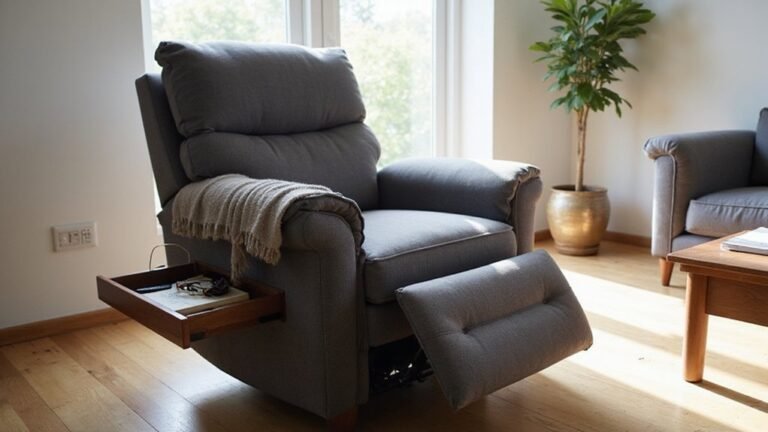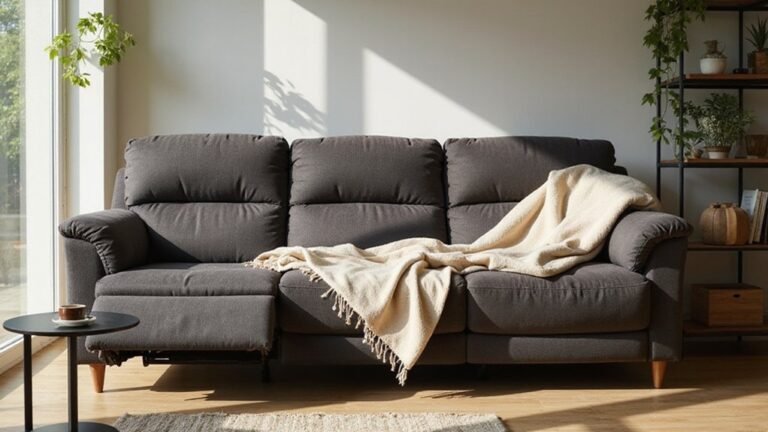
Wondering how long your reclining sofa will last? Most last between 7 and 15 years, but that can vary a lot depending on the quality and how you use it.
A sturdily built piece with good materials can stay comfortable for over a decade, while cheaper options might not make it that long. Keep reading to learn the key factors that affect its lifespan and how to make yours last longer.
The Short Answer: Most Recliners Last 7 to 15 Years
Most recliners last between 7 and 15 years. The lifespan depends heavily on quality, with models featuring solid wood frames and high-density foam supporting a longer duration. Leather upholstery tends to outlast fabric in durability. Your choice of color options mainly affects maintenance rather than longevity. Simpler, well-assembled mechanisms are often more reliable over time, though reduced motion range can be an unintended consequence of less sophisticated designs. When evaluating a recliner’s price, you’re essentially assessing its expected lifespan based on these core construction elements. A key difference is that power recliner motors average about a decade of reliable operation before potential issues arise. If problems occur, careful troubleshooting electric recliner components like wiring and switches can often identify the fix.
Why Your Recliner’s Lifespan Could Vary Wildly
Your recliner’s lifespan can vary widely depending on how you use and care for it. Most recliners last between 7 and 15 years, but your habits play a crucial role in that range. Repeated nightly reclining accelerates fabric and mechanism wear, while rough or aggressive use stresses the frame. Exposure to direct sunlight causes upholstery fading much faster, leading to fabric deterioration in about 2 to 3 years if not protected. In households with multiple users or kids jumping on the furniture, wear and tear happen significantly quicker. Regular cleaning removes dust and prevents fabric from degrading prematurely, but skipping this maintenance speeds up deterioration. A regular inspection routine can catch minor issues before they become major problems. Pets can cause tears and scratches, and exceeding weight limits puts extra stress on the frame, reducing its lifespan. Unwanted rocking motion can also strain the reclining mechanism and accelerate wear, but this can often be stabilized with simple fixes. Using proper body alignment when reclining can help distribute weight more evenly and reduce strain on the furniture. Ultimately, your environment and routine maintenance determine whether your recliner stays functional for the longer or shorter end of its expected years.
How a Recliner’s Build Quality Makes or Breaks Its Lifespan
A recliner’s build quality directly impacts its lifespan more than how you treat it. A sturdy wood frame is essential for long-term resilience because it can withstand daily use and stress over many years. Particle board frames, on the other hand, lack the strength to hold up over time and tend to fail quickly. The seat’s high-density foam core also plays a key role; it prevents permanent sagging and maintains comfort. Construction methods are equally important— for example, a double-webbed suspension system can fight sagging for more than ten years. The power system is also a key longevity factor, as models with efficient motors draw a modest 50 to 150 watts, which reduces electrical stress on components. If you ever need to replace worn covers, a DIY upholstery guide can provide the steps to refresh the fabric and extend the chair’s life, and having a guide for disassembling your reclining sofa can also make repairs and maintenance much easier.
Material choices for the fabric or leather also matter greatly. A low-quality polyester blend may wear thin and tear in just a few years, whereas a high-quality, triple-stitched fabric or protected leather will last much longer. Your selection of durable materials and careful construction can turn a recliner into a reliable, supportive piece that stays comfortable for 15 or more years.
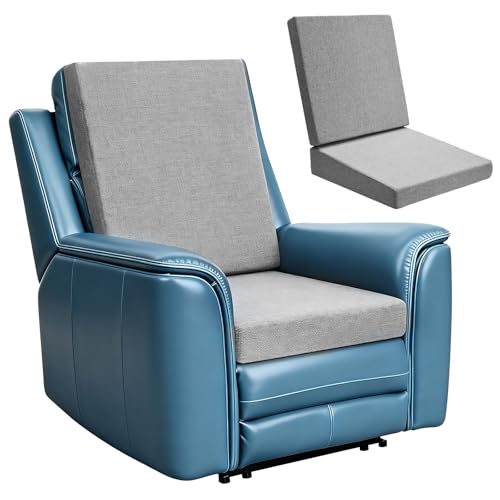
High-density foam filling inside a soft, breathable fabric pillowcase. The contoured design conforms to the body, relieving pressure on the back and legs for lasting comfort during extended sitting.

GET UP EASIER: This recliner cushion measures 20 x 20 x 4 inches and is designed to be a rising aid for seniors, effectively reducing the stress of getting up. At the same time, it can also relieve neck and back fatigue for sedentary adults, assist in maintaining correct sitting posture, and take care of spinal health.
Which Wears Out First: The Mechanism or the Frame?
The mechanism typically wears out before the frame. While a good wooden or metal frame can last 15 to 25 years, the reclining mechanism usually only lasts 5 to 10 years. Heavy use or exceeding weight limits can accelerate wear, leading to failure within just 5 years. Signs of a worn mechanism include grinding noises or sticking, which appear long before any wobble or structural damage develops in the frame. A broken recliner pull cable is one such issue that can render the recliner inoperable. Although upholstery might show stress near moving parts, this often indicates issues with the mechanism rather than the frame itself. Because the mechanical parts are subjected to constant motion and strain, they tend to fail sooner despite the frame’s durability. This constant strain can even contribute to neck and back strain for the user if the recliner fails to provide proper support. Common causes of this early mechanism failure include worn-out bushings or stretched springs that compromise the recliner’s stability.

【Universal Recliner Part】Couch release handle size is 3.5" by 3", This handle replacement with cable is a universal replacement part found in Ashley Furniture and most recliner brands.

Match by Size: oval handle face 3.5 by 3 in; exposed cable length about 4.75 in, measured from the buckle to the top of the Z-hook bend; total cable length about 37 in. Compare these three numbers with your original part - sizes vary a lot between models, so measure first.
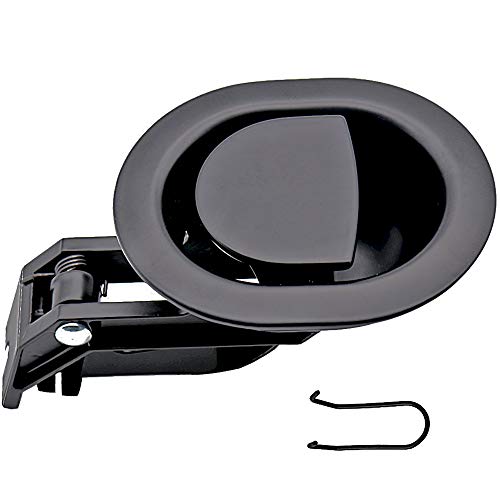
【Universal Recliner Part】Couch release handle size is 3.5" by 3", This Recliner handle replacement is a universal part found in Ashley Furniture and most recliner brands.
How Your Daily Habits Shorten or Extend Recliner Life
Your daily habits can significantly shorten or extend the lifespan of your recliner. Sitting or reclining for more than 8 hours each day accelerates wear by approximately 40 percent, reducing its usable life to just 5 to 7 years. Activities like jumping onto the chair or pushing armrests instead of using the proper lever increase the risk of mechanism failure and damage. If a failure does occur, you can often perform basic DIY troubleshooting before calling a professional.
Slouching unevenly puts additional stress on the frame and mechanism, causing 20 percent more wear over time. Regular weekly lubrication of moving parts helps maintain smooth operation and prolongs mechanism life. Ignoring dust buildup around joints and moving components leads to reduced efficiency and potential failure, especially in the mechanisms. For electric models, ensure tidy cable management to prevent snags and electrical issues.
Environmental factors also matter: high humidity causes metal corrosion, while prolonged exposure to direct sunlight ages fabrics three times faster. Moreover, aggressive movements such as pushing or pulling harshly can break parts physically. Moving the recliner improperly can also cause damage to its frame and mechanisms, so always use proper lifting techniques or a furniture dolly. On the other hand, occasional gentle use and consistent maintenance can extend your recliner’s functional life well beyond14915 years.
Material Lifespan: Fabric vs. Leather vs. Synthetic
Leather generally outperforms fabric in durability, lasting 15 to 20 years with proper care. Its surface can be maintained for over a decade through correct dyeing and regular cleaning, and it requires less ongoing maintenance. The frames of leather sofas are also built to last significantly longer, often enduring decades longer than fabric options. In contrast, fabric sofas tend to last between 7 and 15 years, with daily use and cushion insulation contributing to wear and tear that limits their lifespan to around 7 years in practice. Synthetic or mixed-material sofas are typically less durable, lasting about 5 to 10 years, and tend to degrade more rapidly under heavy use. Budget synthetic options may fail within five years, making leather a more reliable choice for longevity, often lasting three times longer than a comparable fabric sofa. Early diagnosis of mechanical issues like a faulty locking mechanism can help extend a sofa’s serviceable life. The difficulty of accessing the internal frame for repairs, such as disengaging clips or knobs, can also affect the overall usable life of any reclining sofa. A well-connected recliner motor port under the seat is crucial for preserving the mechanical function over the sofa’s lifespan.
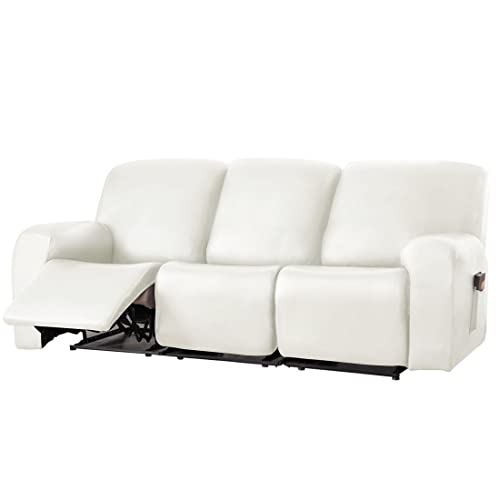
Water-Proof Surface: Our sofa covers are made with premium faux leather fabrics to ensure both elegant appearance and daily protection from water, dust , etc. Soft and smooth to the touch and not easy to collect hair or pets fur. Please refer to our measuring guide and measure your furniture prior to order.
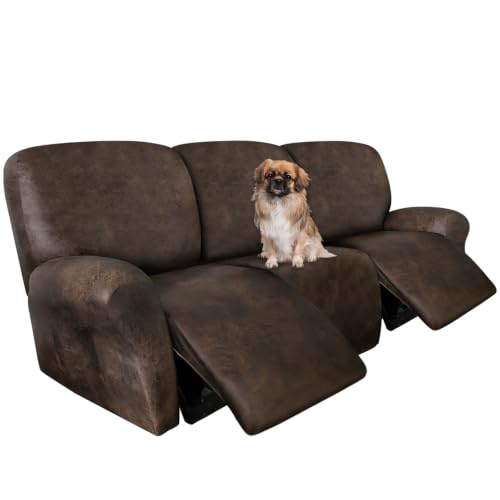
UNIQUE MATERIAL: Our recliner couch cover are now made from a thicker and softer premium fabric. It resembles leather in grain, texture, and luster but is more breathable and smooth, non-pilling, making it a great choice for all seasons

PERFECT FIT: This 8-piece set includes 3 backrests, 3 footrests, and left/right arm covers. Fits reclining couches 72"-93" wide. It is suitable for both manual and electric recliner styles. Before purchasing, please refer to the detailed measurement guide to ensure compatibility. If needed, you can easily tuck any excess fabric into the chair seams for a snug fit
Buying Guide: 5 Features That Signal a Durable Recliner
A durable reclining sofa can be identified by examining five key construction features. First, look for a solid hardwood frame, which resists warping and provides lasting stability. This material is crucial because it maintains the sofa’s shape over years of use. Next, the reclining mechanism should be made of heavy-duty, drop-forged steel, as this core component ensures smooth operation and longevity. To keep this mechanism working properly, periodic inspection for debris accumulation and loose hardware is recommended.
Joint construction is also essential; reinforced corner blocks and grommeted connections increase the sofa’s ability to withstand daily wear without loosening or breaking. Then, evaluate the fabric or leather along with the cushion core. High-density foam—at least 2.5 pounds per cubic foot—supports the upholstery and prevents sagging, extending the life of the cushions.
Lastly, a strong warranty, such as a 10-year coverage on the frame, signals that the manufacturer is confident in these features and that you can expect a durable piece of furniture for years to come. Consider protecting your investment with a machine washable cover to help maintain its appearance and extend its lifespan.

Multifunctional Combination: Experience the ultimate versatility with our futon sofa bed. As a stylish 2-seater couch, it's suitable for lounging and entertaining guests. This innovative piece can also be converted into a king-size bed, bringing a spacious sleeping area for overnight visitors

Furniture grade plywood frame construction 18mm @ 11 ply & 18mm @ 14 ply

Furniture grade plywood frame construction 18mm @ 11 ply & 18mm @ 14 ply
The Long-Term Cost: Why a Cheap Recliner Often Fails Faster
A cheap recliner often fails faster because its mechanical components are made from inferior metal and plastic gears that wear out approximately 40% quicker and fail 2.5 times more frequently than those in higher-quality models. Its particle board frame degrades over time, losing strength and stability, while low-density foam compresses rapidly, leading to sagging and discomfort. Without durable materials and ergonomic design, you lose the lasting support and comfort that more expensive recliners provide.
Hidden costs add up quickly with budget options. Repairing a broken mechanism can cost more than the chair’s original price, often forcing you to replace the entire recliner every 5 to 8 years. Over a span of 15 years, buying three cheap recliners can end up costing more than investing in a premium model designed to last between 12 and 20 years. These cheaper units miss out on long-term savings as well as advanced features that help prevent frequent breakdowns, potentially making them a costly shortcut in the long run.

【WATERPROOF PREMIUM FABRIC】This 3 seater reclining sofa cover is crafted from high quality fabrics, mature waterproof coating technology ensures it has good leak-proof functions, the inner layer is filled with thick and soft materials, strong and durable, it provides excellent comfort for your recliner

Great Quality Material - Recliner sofa cover made of 88% polyester and 12% spandex jacquard fabric. The fabric is thick, highly elastic, and soft to the touch, providing excellent protection against stains, spills, scratches, and tears. The recliner chair couch cover gives your recliner sofa a luxurious and elegant new look.

Luxury Protection & Comfort: ChengEase crafted with premium polyester-spandex blend and classic striped pattern fabric, this tear-resistant cover delivers cloud-like softness while defending against spills, pet claws, and daily wear. Instantly renews your recliner's look with pet/kid-friendly durability.
Make Your Recliner Last: 5 Essential Care Tips
Regular maintenance is key to making your recliner last longer. Vacuum the upholstery weekly to remove dust and debris, which can wear down the fabric over time. Spot clean stains immediately using a gentle upholstery cleaner to prevent lasting damage. Rotate and flip cushions every three to six months to promote even wear and maintain shape; replace foam cores if they become saggy or lose support. Lubricate the metal hinges once a year with a silicone-based lubricant to keep the mechanism operating smoothly. Always operate the recliner gently to avoid putting unnecessary strain on moving parts. Keep it out of direct sunlight and maintain indoor humidity levels to prevent fabric fading and material deterioration. Adhere to the manufacturer’s weight limit and avoid standing on the recliner, as such actions can damage the frame and mechanism. Following these care tips will help keep your recliner comfortable and functional for years to come.
When to Repair Your Recliner and When to Replace It?
Repair your recliner when issues are minor and inexpensive to fix, such as loose levers, stiff mechanisms, small fabric tears, worn pivot points, or accumulated debris. Replacing broken springs or cushion foam inserts can often be done at a low cost and prolong the chair’s life. However, if you face major problems like complete motor failure, significant frame cracks, or severe fabric wear exposing padding, replacement is usually the better choice. Consider replacing your recliner if repair costs would be more than half the chair’s value or if parts are unavailable. For power recliners, failing motors or depleted batteries after about 10 years often make replacement more practical, especially if the structural overall integrity has declined.