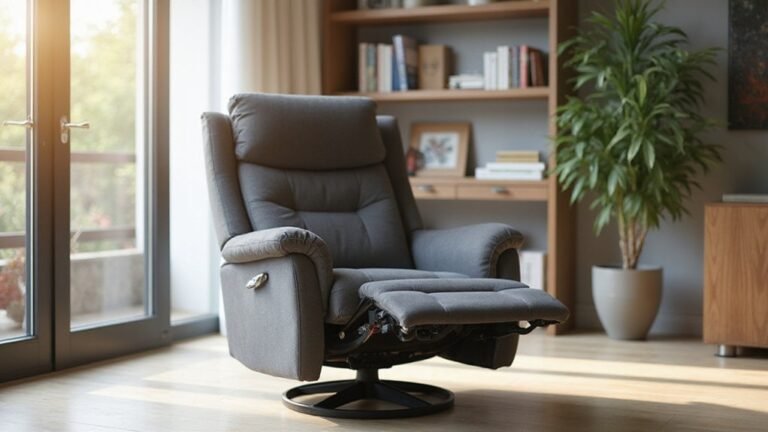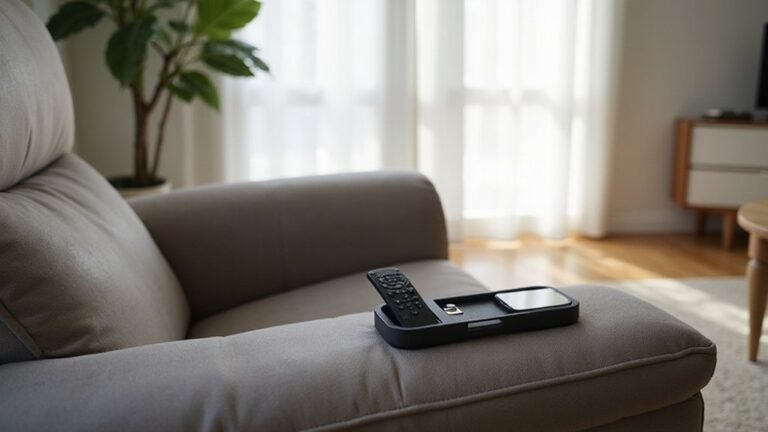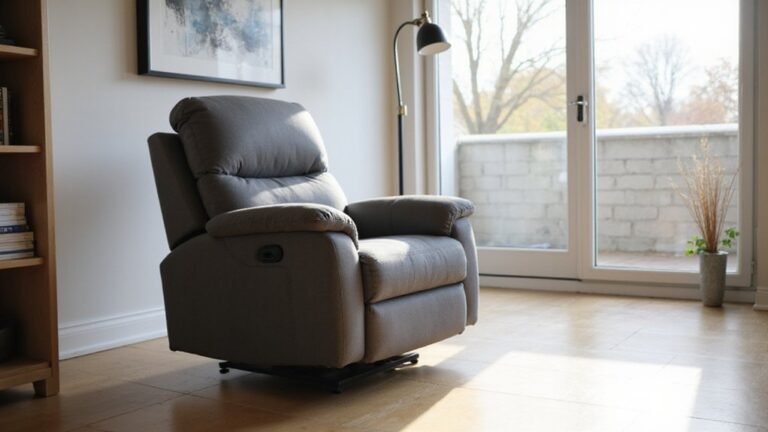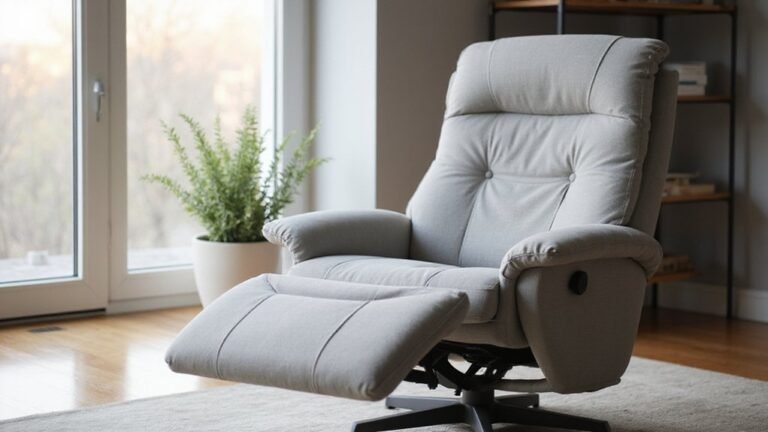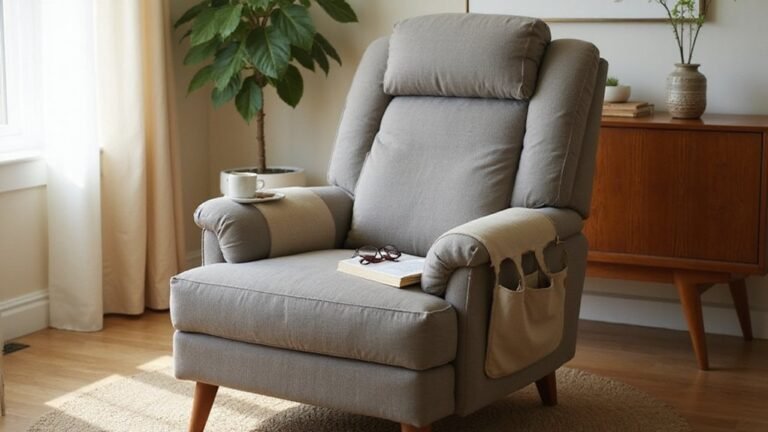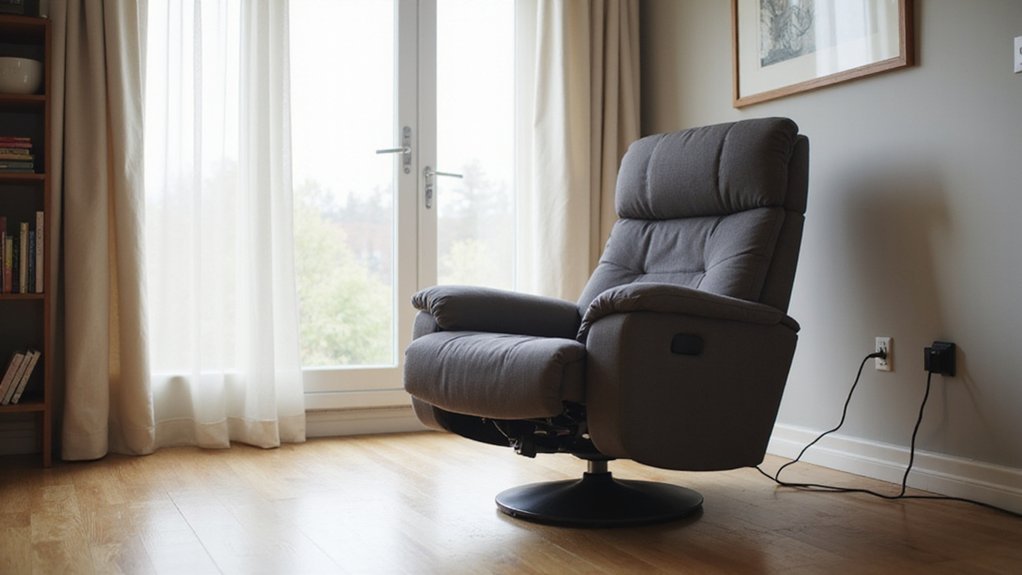
Wondering if your power recliner needs to be plugged in to work? Most models do require a standard wall outlet to power their motors.
Although using extension cords is generally not recommended for safety reasons. If cordless freedom appeals to you, battery-powered options are available.
Alternatively, you might opt for a manual recliner that needs no electricity. Keep reading to find out which choice suits your space and lifestyle best.
Yes, Most Power Recliners Need an Outlet
Most power recliners require a standard wall outlet to operate. They rely on a continuous electrical current to power the internal motors that adjust the chair’s position. Because of this, your furniture placement is limited by the location of nearby outlets. The cord length is typically only a few feet, so placing the recliner too far from a power source can be challenging. Stretching the cord too far may strain or damage the wiring, potentially causing safety issues or malfunction. To ensure proper functionality, you need an outlet that is properly grounded and conveniently located within reach of the chair’s cord. Before assuming a motor has failed, it’s wise to first check the power supply with a multimeter to verify its voltage output. These motors, often called linear actuators, are coupled with gears and levers to move the chair smoothly. For issues beyond a faulty power supply, like a broken internal frame or mechanism, consider consulting a professional.

Safe And Reliable: Features a durable PVC jacket, ensuring hassle-free and long-lasting use

Before you buy this Motor Cable ,Please confirm the interface method before purchase, one round and one flat.The interface is consistent and can be used

INCLUDES: 6 foot extension cord in Black; ideal for extending power when needed
Battery-Powered Recliners for Cordless Freedom
Battery-powered recliners offer cordless freedom by operating without the need for a wall outlet. They are powered by internal battery packs connected via universal 2-pin ports, allowing you to place your furniture anywhere in your space. Standard battery packs typically provide between 50 and 100 hours of use on a single charge, making them suitable for extended relaxation without frequent recharging. Many models are compatible with a wide range of recliners, enhancing their practicality. You can even convert a manual recliner to enjoy these cordless benefits. Before starting any conversion project, it is wise to first check the chair’s structural integrity. Recharge during use is a feature enabled by proprietary software in some advanced models like the FreeMotion Battery Power Pack. Regular users generally recharge their recliners once every three months, while infrequent users might only need to recharge every six months. Keep in mind that using the recliner while it is charging can reduce charging efficiency, so it’s best to operate it only when unplugged. To maximize the lifespan of your battery, unplug it once it’s fully charged.
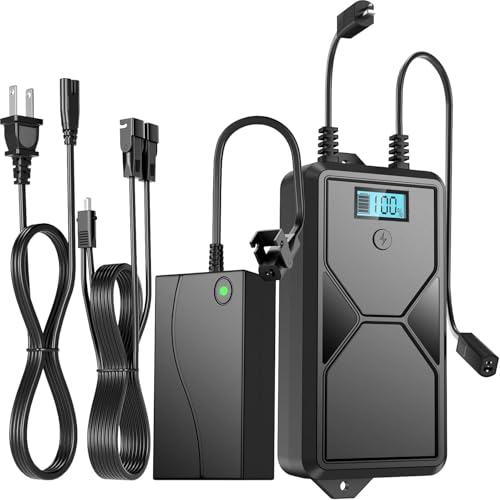
【UNIVERSAL 2-PIN COMPATIBILITY】 Specially designed for most mainstream power reclining furniture equipped with standard 2-pin connectors, including Okin, Limos, and Berkline. Perfectly powers up your electric recliners, loveseats, and lift chairs. (Note: Not compatible with 5-pin motors).

【Movable Power Supply】No More Outlet Hunting! Say goodbye to limited sofa placement! This Universal Battery Pack for Reclining Furniture lets you power your sofa anywhere in your room, garage, or patio—no need to hunt for wall outlets. Perfect for open-floor layouts or rearranging furniture effortlessly.

Looking to float your furniture in the center of the room without the hassle of cords? This 6000mAh wireless rechargeable battery pack is the perfect solution
Where to Place Your Power Recliner: Outlet vs. Anywhere
Choosing the placement for your power recliner depends on whether you opt for a corded or a battery-powered model. A corded recliner must be placed near a standard 120-volt outlet. Using an extension cord is not recommended because it can overheat and pose a fire hazard. The power cord connects to a designated port on the back of the chair’s armrest. This placement requirement can limit your furniture layout, influencing upholstery choices and color options since the chair’s position becomes a fixed element of your room design. This is a particular consideration for pregnant users, who should ensure their safe reclining angles are achievable from that fixed position. In contrast, a battery-powered recliner provides the freedom to place it anywhere without worrying about cords or outlet proximity. This flexibility allows you to prioritize style and room flow. Regardless of the type, always ensure that any visible power cord is routed safely to prevent pinching or tripping. Proper cord management helps maintain both the functionality of your recliner and the aesthetic appeal of your space. If you ever need to move a corded model, carefully follow the manufacturer’s guide for disconnecting power wiring. If your chair stops moving, first try manually testing the recline without forcing the mechanism to avoid damage.

This battery pack for reclining furniture is designed exclusively for standard 2-pin connector setups, perfectly powering electric recliners, sofas, and lift chairs. (Note: Not compatible with USB, 5-pin, RJ45, or barrel plug interfaces)

【Universal Compatible Battery Pack for Reclining Furniture】The recliner battery can works with almost all reclining furniture brand models that use a 2-prong connection-wireless battery pack for Okin, Limos, Berkline, Flexsteel, Etc.

This is timotion tp2 tp2p ip20 class 2 Power Supply Adapter for power recliner lift chair electric sofa
How to Operate a Power Recliner During a Power Outage
If you want to prepare for power outages proactively, installing a backup battery pack is a good solution. To do this, unplug the chair, connect the battery unit to the designated port, and then you can control the recliner electrically during an outage. When moving the chair to install the battery, using tie-down straps can secure it and prevent shifting. Always refer to your chair’s manual for precise instructions and use gentle pressure when moving the chair manually to avoid damaging internal components. For any manual adjustments, you may need to access the recliner cable mechanism underneath the seat, though this is only possible if your chair model has a manual release lever.

Freedom from tangled cords and Safe in use - Arrange your power furniture any way you like, no more messy cables while keeping your recliner charged, also the battery has been tested by certified laboratories and meets rigorous safety standards to ensure it is safe for end users

【Universal Compatible Battery Pack for Power Recliners】This rechargeable battery pack is compatible with most reclining furniture brands that use a 2-prong (round or flat) connection, including Okin, Limoss, Berkline, Flexsteel, and more. Perfect for power recliners, lift chairs, sofas, and loveseats. Not compatible with 5-pin connectors. Please confirm your furniture’s power interface before purchasing. (⚠️Notice: Charger not included, you need to use the plug that came with the furniture.)

425VA/260W Standby Uninterruptible Power Supply (UPS): Uses simulated sine wave output to provide battery backup power and to safeguard home office, home entertainment including computers, gaming consoles, and broadband routers
The Energy Use and Costs of a Power Recliner
Power recliners use a small amount of electricity, with active motor operation drawing approximately 58 watts and standby mode consuming about 14 watts. Your total energy cost depends on how often and how long you use the recliner. To estimate your expenses, use this formula: kilowatt-hours (kWh) = (Watts × Hours used) /27A typical high-quality power recliner made with durable materials can provide a decade or more of reliable service before the motorized components may need attention. For typical daily use, the monthly cost usually stays under $1, and annual expenses range from about $2 to $5. Many advanced models offer backup battery systems to provide several cycles of operation without needing a wall outlet. If your power goes out, you can use this battery backup or perform a manual override to close the chair. Turning the recliner off when not in use helps cut down on idle power consumption, further reducing costs. Overall, the energy impact of a power recliner is minimal and unlikely to significantly affect your electricity bill.
Power Recliner vs. Manual: Key Trade-offs
A power recliner generally offers more convenience but comes with some trade-offs compared to a manual model. With a power recliner, you can achieve nearly unlimited adjustment positions at the push of a button, which is ideal if you want effortless customization and ease of use. However, these models typically cost more upfront and during installation because of the integrated wiring and electrical components. The assembly process can be more complex, involving wiring connections that might require basic electrical knowledge or professional help.
Manual recliners are simpler and often more reliable over the long term because they need no power source or wiring. They are usually less expensive, both in initial purchase and maintenance, making them a cost-effective choice. When you want to recline, you manually engage a lever or handle, providing instant adjustment without waiting for motors to kick in. Nonetheless, manual models often have limited preset positions and may demand more physical effort, which can become a concern for those with mobility challenges. For basic repairs, such as fixing a stuck footrest or a loose cable, manual recliners can often be addressed with common tools and a DIY guide.
In terms of aesthetics, power recliners sometimes incorporate additional tech features like USB ports or speakers, which can slightly clutter their design and affect a sleek appearance. Manual recliners typically have a more classic or minimal look, emphasizing simplicity and clean lines. Your choice between the two ultimately depends on whether you prioritize convenience and tech integration or simplicity and cost efficiency.

Swivel Rocker Recliner Chairs:Swivel recliner chairs for adults have 360° Swivel, 30° Rocking, and 90-150° angle reclining function for versatile use. Easily adjust the small rocker recliner chair by pulling out the lever located next to the armrest to activate the footrest. Note that the swivel recliner chair backrest smoothly retracts as you change positions.The swivel function adds an element of fun and entertainment and it fits into tight spaces for a comfortable experience.

Overall Dimensions: Kindly please confirm the size before buying. Measure 36"W x 35"D x 41"H, Seat Dimensions - 24"W x 20"D, Seat Height - 19", Weight Capacity - 350 lbs.

POWER LIFT ASSISTANCE: Power lift function could push the entire recliner chair up from its base to help the senior to stand up easily without adding stress to back or knees, Just press the two buttons on the remote control to smoothly adjust the lifting or reclining position(max 160°), The alloy steel frame that has passed the SGS test enables a load-bearing capacity of up to 350lb.