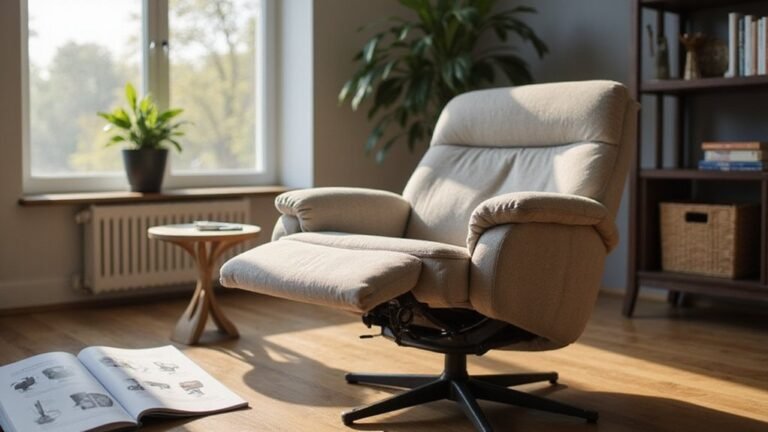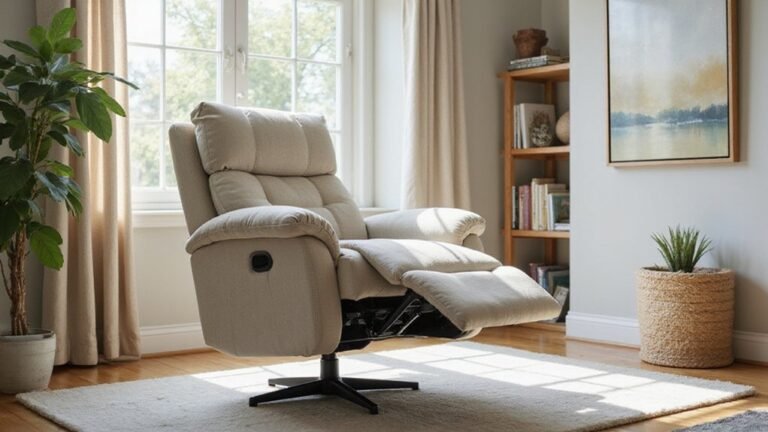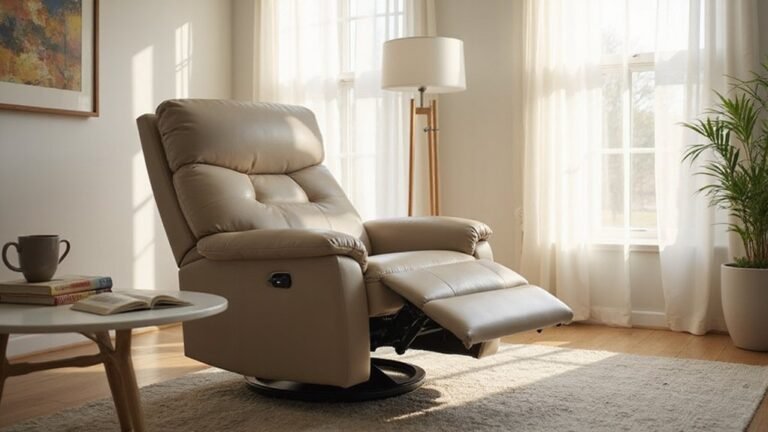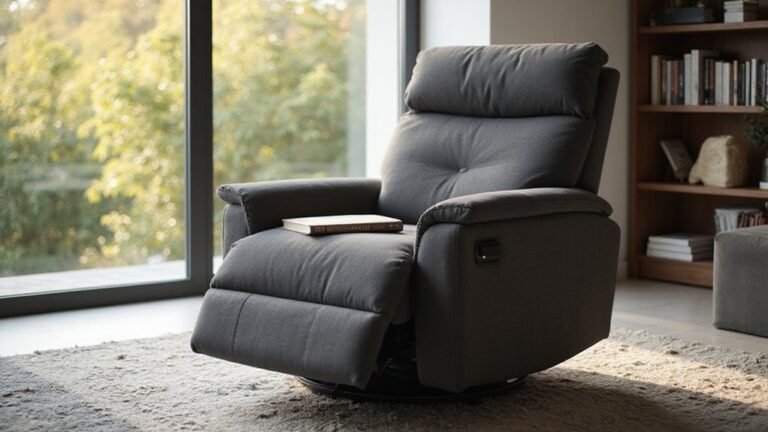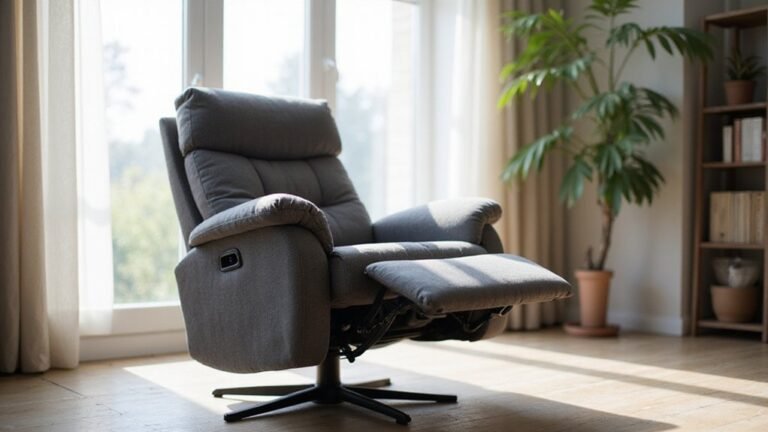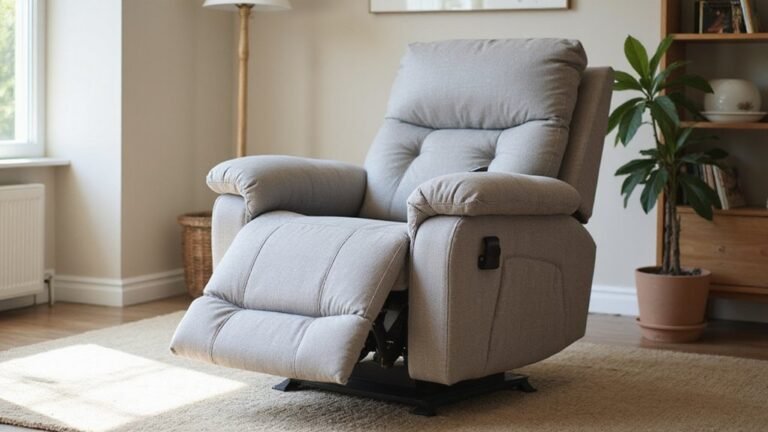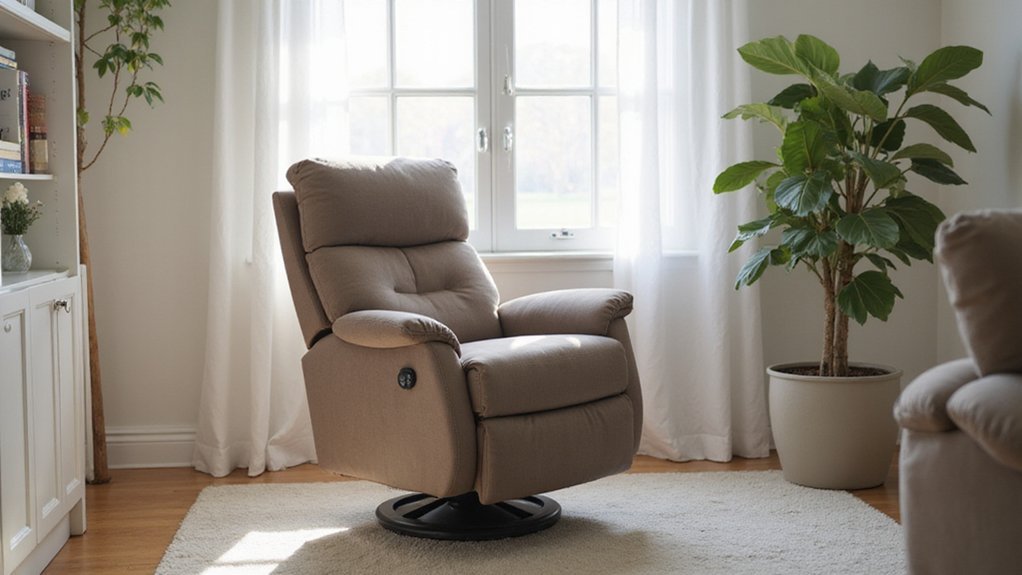
If mobility challenges make it hard to sit down or stand up safely, a riser recliner chair could be a helpful solution.
These chairs use motorized lifts to make changing positions easier, reducing strain and lowering the risk of falls.
They also offer comfort features that improve posture and boost circulation.
This article will explain how a riser recliner can support your daily mobility.
What Exactly Is a Riser Recliner Chair?
A riser recliner chair is essentially a standard armchair equipped with powered assistance to help you stand up more easily. It features electric motors that tilt the seat base and backrest forward, guiding you smoothly into a standing position. These motors are mounted on a sturdy metal scissor framework, ensuring reliable operation over time. For maintenance or moving, you may need to disconnect power wiring following safety precautions similar to those for electric reclining sofas. For such tasks, understanding the specific disassembly steps for your model is crucial to prevent damage.
Material durability is vital for daily use, so riser recliners often have reinforced frames and sturdy upholstery to withstand regular sitting and weight. Despite their functional focus, they come in a variety of fabrics and finishes, allowing you to choose a style that complements your home decor by balancing scale and proportion with your other furniture pieces. The core mechanism is safely powered through a transformer, providing essential support whenever you need it without compromising on appearance.
Regaining Independence in Daily Activities With a Riser Recliner
A riser recliner chair can help you reclaim independence in your daily activities by allowing you to sit and stand without assistance. Its motorized mechanism gently elevates the seat, making transitions smoother and reducing the risk of falls. This support enables you to perform tasks like cooking, dressing, or reading comfortably and safely. For the best setup, it’s wise to prepare a clean workspace for initial assembly or any future adjustments. The ergonomic design enhances posture and pressure relief, alleviating pain and enabling more relaxed movement. Elevating your legs improves circulation and decreases fatigue, helping you stay active longer. The tilt-in-space function moves the seat and back together to reduce shear, enhancing comfort for prolonged sitting. You can also keep your chair securely positioned with anti-slip pads or similar solutions to prevent unwanted movement. To maintain its appearance and function, it’s important to regularly clean your riser recliner using an upholstery attachment to remove dust and debris. Additionally, its stylish appearance ensures it fits seamlessly into your home decor, turning a functional piece into a comfortable and attractive part of your living space. Overall, a riser recliner empowers you to handle everyday activities independently, boosting confidence and maintaining your autonomy at home.

Raises Recliner Height 1.75" - raises effective Seat Height 4-6". Weight capacity is 800 pounds including furniture
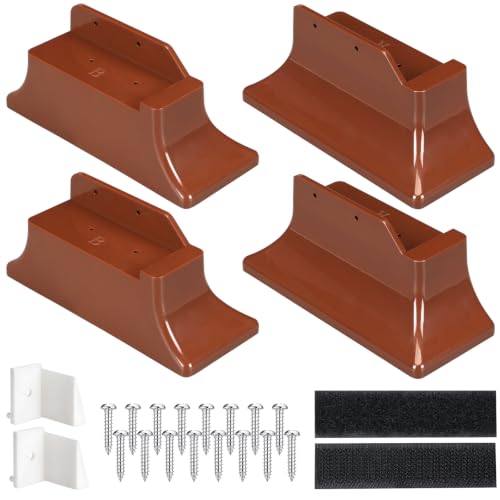
Product Includes: a set of 4 seat risers, a sufficient quantity to meet daily replacement needs

Get Up with EaseGet in and out of your recliner, chair or bed easily and safely.
How the Riser Function Safely Boosts Mobility
The riser function safely boosts mobility by eliminating the physical effort needed to stand. Its precision motors deliver a smooth and controlled lift, removing the need for the dangerous rocking motion traditional chairs require. This stable, jolt-free mechanism prevents instability and reduces your risk of falling significantly. By providing a reliable and secure way to stand, it allows you to maintain independence without relying on a caregiver. Built-in safety locks and continuous support help build your confidence with each standing attempt. Additionally, the stable base enables you to perform exercises from a secure position, supporting both daily movement and fitness routines. Modern chairs also combine this powerful mobility support with sleek designs that blend seamlessly into your living space, so you don’t have to choose between style and function. No matter your strength level, you can access standing positions reliably, enhancing your overall safety and independence, and should a mechanical issue arise, the recliner cable mechanism is typically straightforward and economical for DIY repair. Many common problems can be resolved by methodically testing the power supply and wiring for faults. For common issues like a loose back, inspecting and tightening the locking mechanism can often restore stability without professional help.

Product Includes: a set of 8 seat risers, a sufficient quantity to meet daily replacement needs

Power Specification: Input: AC 100-240V, 1.5-2.0A, 50/60 Hz. Output :DC V.2-Prong AC/DC Adapter Replacement (w/ 2-Pin / 2Prong Connector.)

Universal and Durable: CUGLB lift chair remote replacement perfectly fit for most brands that have a straight plug, round 5 pin connector, 2 button with up and down function. good quality, makes it strong and durable
How Reclining Eases Pain and Supports Better Posture
Reclining your chair to an angle of 100–110 degrees can significantly reduce spinal load by up to 40%, which helps ease pain and support better posture. This position redistributes pressure across your spine, alleviating compression on degenerative discs. Proper ergonomic design incorporates this principle to promote spinal health. Using a chair with adequate lumbar support maintains your spine’s natural curve, preventing slouching and the common C-curve collapse that leads to discomfort. Additionally, semi-reclining positions allow your back muscles to relax, reducing tension by shifting your center of gravity. Keeping your hips and knees at a 90-degree angle enhances postural stability, minimizes lower back strain, and facilitates muscle recovery. For improved comfort, it is beneficial to keep knees slightly bent to relieve tension on the sciatic nerve. The independent adjustment of a dual power recliner allows for precise positioning to achieve these therapeutic angles. When restoring a chair for optimal support, selecting a suitable fabric for the new upholstery is a key consideration, and modern electric models are designed for low power consumption to ensure they are economical to use.

For convenience and durability, we upgraded and lengthened the straps to fit more chairs instead of adding extra extension straps.
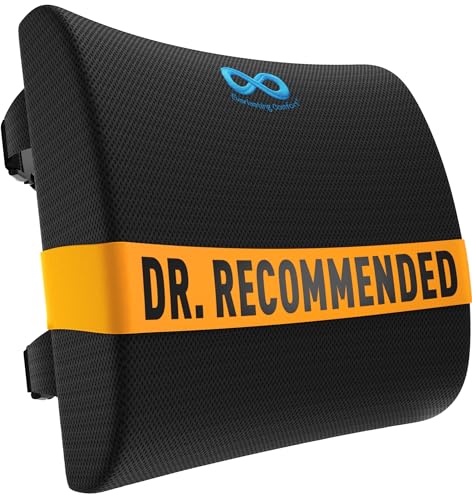
LUMBAR SUPPORT PILLOW FOR CAR OR YOUR OFFICE: Made with high-density memory foam, this desk chair cushion balances firm posture support with long-lasting comfort - not overly hard, not too soft. Engineered to gently support the natural curve of your spine over time - unlike oversized pillows that collapse. Ideal for home offices, gaming sessions, or long commutes, it’s a supportive cushion for anyone who spends long hours sitting in cars, office chairs, couch, or recliner

𝗔𝗹𝗹 𝗗𝗮𝘆 𝗖𝗼𝗺𝗳𝗼𝗿𝘁 - High-grade memory foam contours to your spine, delivering lumbar support for office chair users and helping maintain neutral posture through long workdays
Relieving Joint Pressure and Enhancing Leg Circulation
Reclining chairs can significantly reduce joint discomfort and improve circulation. The powered rise function shifts your weight from your hips and knees to the chair base, decreasing contact pressure on arthritic hip joints by up to 40%. This reduces the painful effort needed to stand, lowering stress on your ankles and knee ligaments. Many models now feature power recliners with smooth electric controls for effortless adjustment. Promote easier transitioning between sitting and standing positions, which is especially beneficial for arthritic knees and hips. For those who prefer a stationary seat, you can apply affordable stabilization methods to prevent unwanted motion. Elevating your legs above heart level with the chair helps promote venous return, increasing blood flow back to your heart by about 30%. This boost in circulation reduces swelling and fatigue in your feet and ankles. Additionally, the chair’s sleek, aesthetic design is paired with durable materials, ensuring consistent support for your joint and circulatory health over time. Choosing models with high-quality upholstery and a sturdy frame can contribute to this lasting support and durability.
Essential Riser Recliner Safety Features
Manufacturers guarantee a riser recliner remains stable while moving through a combination of sturdy design features. They use a durable steel frame with a wide base that lowers the center of gravity, preventing tipping or flexing during the lift cycle. Anti-tip mechanisms and a locking system secure the chair in your chosen position, ensuring safety. An integrated battery backup maintains motor operation during power outages, and safety stops automatically activate if an obstruction is detected. Adjustable belts keep you securely in place during movement, while all electrical components adhere to strict fire safety standards. If the chair ever fails to recline, the first step is manually testing the recline movement to identify the cause. For easy maintenance, many furniture protectors like a machine washable recliner cover can be used to keep the chair’s upholstery clean. If a motor issue arises, the internal recliner frame and motor can be accessed by carefully disassembling the back panel. Despite these safety features, manufacturers ensure the chair maintains an attractive appearance. These safety measures are typically backed by a limited warranty, offering you peace of mind.

👍【Sturdy And Stable Bed Risers】 Our table risers are made of high quality thickened PP plastic, which is strong enough to support any heavy furniture for home or office. The internal mesh reinforcement design greatly increases its load-bearing capacity. Top bumps and removable thick rubber pads on the bottom of the desk risers can firmly grip the furniture legs, shock absorbing and anti-slip to avoid furniture sliding, protect floors from scratches or dents.

Mobility Assistance Solution: Helps those who suffer from weak knees, bad backs, stroke or arthritis by elevating your favorite chair 3 inches. Requires no assembly and there are no moving parts. The security lip around the top and the rubber pads installed in each corner are safety features that help prevent your chair from moving or sliding

👍【Sturdy And Stable Bed Risers】 Our table risers are made of high quality thickened PP plastic, which is strong enough to support any heavy furniture for home or office. The internal mesh reinforcement design greatly increases its load-bearing capacity. Top bumps and removable thick rubber pads on the bottom of the desk risers can firmly grip the furniture legs, shock absorbing and anti-slip to avoid furniture sliding, protect floors from scratches or dents.
How to Choose the Right Riser Recliner for You
To choose the right riser recliner, start by measuring the user carefully to ensure a proper fit. Focus on seat width, depth, and backrest height to provide comfort and support. For optimal posture and safety, consult with a seating specialist for a personalized assessment. Next, evaluate the motor functionality: a dual-motor system offers independent control of the footrest and backrest, while a tilt-in-space design maintains the same angle throughout movement, which is helpful for users with complex postural needs. Fabric choice also influences maintenance and comfort; leather is easy to clean, making it suitable for those with allergies or sensitivities, whereas soft textiles may be better for sensitive skin. Consider the chair’s design aesthetics to match your decor, but also check spatial requirements. Wall-hugger models, for example, save space by only needing a few inches of clearance from the wall to fully recline. Finally, always test the chair by cycling through all positions to confirm it feels secure and comfortable before making a final decision, ensuring the reclining mechanism operates smoothly via the control buttons. When selecting a model, prioritize those with a longer warranty, as this is often an indicator of a higher quality, more durable product.

【Power Specification】: Input: AC 100-240V, 1.5-2.0A, 50/60 Hz. Output :DC 29V/24V 2.0A. Power Adapter Almost compatible with most brand recliners: Switching power supply transformer fully compatible with OKIN, Limoss and Tranquil Ease Lift Chair and Power Recline DeltaDrive and BetaDrive Motors with a two pin (flat & round) connection to the motor.

Dual Motors & Infinite Position: Experience superior flexibility with two independent OKIN motors. Effortlessly control the backrest (100°-180°) and footrest (90°-180°) via remote to find your perfect angle, from upright seating to a completely flat bed position. The lift chair safely assists in standing, making it ideal for seniors or those with mobility needs

Large Recliner: The upgraded design of the two motors allows you to independently control the backrest and footstool of our extra wide recliner, and easily obtain any position you want through the remote control. Our oversize recliner chair can tilt up to 180 degrees, so you can lie down and have a good sleep anytime!