Got a recliner that’s looking a little worse for wear? Whether it’s fabric or leather, knowing how to give it a thorough clean can make a big difference in its appearance and longevity.
By following the right steps, you can restore your chair’s comfort and style without much fuss. Keep reading to learn the key techniques for a deep clean that helps your recliner look and feel fresh again.
Gather Your Tools and Prep Your Recliner for Cleaning
Gathering your tools and preparing your recliner for cleaning is essential before starting. Begin by clearing the surrounding area to ensure full movement and easy access. Next, identify the fabric cleaning code on the tag—W, S, WS, or X—as this determines the appropriate cleaning method. Always perform a spot test in a hidden area to check for colorfastness and fabric response. Your toolkit should include a vacuum with attachments, a soft-bristle brush, white microfiber cloths, and separate buckets for cleaning solutions or water. Organize everything nearby for quick access. Before cleaning, fully recline the chair using the control buttons and remove any detachable cushions to expose all surfaces. If your recliner is electric, the first step is to carefully disconnect any power wiring before proceeding. If you find significant wear or damage during this inspection, you may want to consider a complete DIY upholstery restoration for a more permanent renewal. This preparation step ensures a smooth, effective cleaning process.

WILL IT LEAVE MY CARPET SOAKING WET: No - this car carpet cleaner has a low-moisture foaming formula, is detergent-free, and finishes with the soft feel of clean fabric rather than the wet, stiff, crusty residue low-grade cleaners leave

Removes Both Oil & Water-Based Stains

StainLift Technology. Lift and remove deep down dirt, stains and odors.
Clean Fabric Recliners With a Safe DIY Solution
To clean a fabric recliner safely using a DIY solution, start by vacuuming all areas where loose debris may collect. Focus on crevices, armrests, and under the cushions to remove dirt and dust that can trap moisture and cause stains later. This thorough pre-cleaning step helps prevent dirt from setting deeper into the fabric during wet cleaning.
For the cleaning mixture, combine one teaspoon of mild dish soap, three tablespoons of white vinegar, and one cup of warm distilled water. Lightly beat the mixture until foam forms on the surface. Dip a microfiber cloth into the foam, then wring it out until it is just barely damp. Before applying, test this on a hidden area of the fabric to ensure it does not cause discoloration or damage.
Working in small sections, gently apply the foam solution with circular motions. Be careful not to oversaturate the fabric, as excess moisture can lead to mold or dye bleeding. After cleaning each section, use a second cloth dampened with plain distilled water to rinse the area thoroughly, removing any soap residue. This helps prevent rapid re-soiling by eliminating soap deposits that can attract new dirt. If your recliner has a powered motor, ensure it is unplugged or the battery is disconnected before any cleaning to prevent electrical hazards. Performing this routine inspection of the upholstery can help extend your recliner’s lifespan. For issues beyond basic upkeep, such as a malfunctioning recline, you can consult a DIY troubleshooting guide before calling for service. Allow the fabric to air dry completely before using the recliner again.

RESTORE OR CHANGE THE COLOR: Fabricoat fabric paint has been designed to restore the color to faded fabrics, or completely change the color without changing the texture

Powerful stain removal: This upholstery foam cleaner removes stubborn stains without leaving residue, quickly restoring carpets to a pristine state.

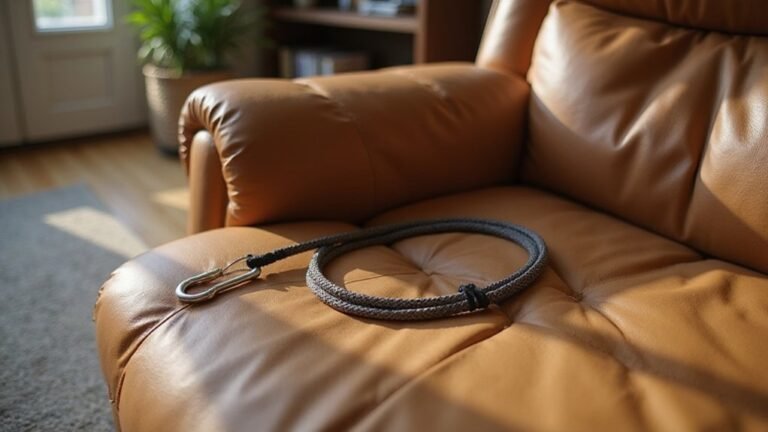
【Comprehensive Repair Kit】: Includes short laces for the upper part of zero gravity chairs and long laces for the lower part (refer to images for detailed instructions). This kit offers an easy installation process that revitalizes your chair's appearance and functionality
Deep Clean and Condition Leather Recliners
Deep cleaning and conditioning are essential for maintaining the appearance and durability of leather recliners. Start by vacuuming with a soft brush attachment to remove dust from seams and creases. Next, apply a pH-balanced leather cleaner to a clean cloth, then gently work it into small sections using circular motions. A soft brush can help loosen dirt without scratching the leather. Immediately wipe away any residue with a damp cloth to prevent streaks or residue buildup. Dry the area thoroughly with a towel to ensure no moisture remains. If your recliner has a loose back, you might consider fixing the reclining mechanism before cleaning to ensure it’s stable.
Once the leather is completely air-dried, apply a dedicated leather conditioner. Focus on flex points like armrests and cushions, as these areas experience the most movement. Before beginning your cleaning routine, be sure your recliner is fully upright and disconnected from its power source. This also allows you to safely inspect the wiring for any visible damage that may need attention. Leather conditioners moisturize the material, preventing cracking and providing a protective barrier against stains. After applying, buff off any excess with a clean cloth to achieve a natural, matte finish. Proper buffing ensures a dry, matte OEM finish and enhances the overall appearance. Regular deep cleaning and conditioning will help keep your leather recliner looking great and lasting longer.
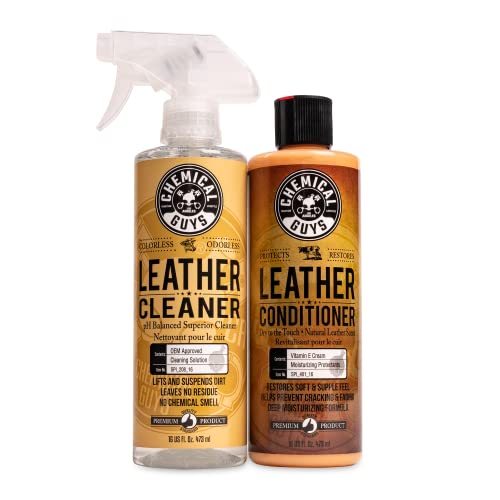
COMPLETE LEATHER CARE KIT (SPI_109_16) - This Chemical Guys kit includes Cleaner and Conditioner, two 16 oz bottles that work together to clean, restore, and protect leather in cars, homes, and more

COMPLETE LEATHER CARE KIT (SPI_109_04) - This Chemical Guys kit includes Cleaner and Conditioner, two 4 oz bottles that work together to clean, restore, and protect leather in cars, homes, and more

Ideal for use on: leather auto upholstery; footwear; furniture; handbags & briefcases; sports equipment; luggage. Ideal as part of your auto detailing supplies during leather cleaning sessions for car interiors, footwear, and other leather goods.
Tackle Hidden Gunk in Your Recliner’s Mechanism
To tackle hidden gunk in your recliner’s mechanism, start with a detailed pivot point inspection. Use a flashlight to identify trapped particles within the joints, as debris can stiffen the moving parts over time. Clear out dust and dirt by blasting compressed air into the joints and using a vacuum crevice tool to extract loose grime. For caked-on dirt, gently agitate it with a small brush to loosen residue. Once the debris is removed, apply a mild degreaser to the joints with a soft cloth, working it into crevices with a small brush if needed. Wipe the area with a damp cloth to remove any leftover residue. After allowing the joints to dry completely, lubricate the pivot points with a thin, silicone-based oil. Drip the oil directly onto the joints, work the mechanism by hand to distribute it evenly, then wipe away any excess oil to prevent dirt accumulation. Ensure you press the height adjustment button on your control panel to cycle the recliner through its positions, helping the lubricant penetrate the entire mechanism. This is also a good time to check for and tighten any loose screws that could affect the mechanism’s tension. This process is especially important for maintaining power recliners and other models with complex moving parts.
Dry Your Recliner Completely for Lasting Results
To dry your recliner completely, start by blotting away excess moisture with clean towels. Focus on seams, under cushions, and any other damp areas. Press firmly to lift moisture without rubbing, which can push water further into the fabric. Then, enhance airflow by placing the chair in a well-ventilated space. Use fans directed at damp fabric and open nearby windows to promote evaporation. Keep the room temperature between 70°F and 80°F to speed up the drying process. Detach cushions and covers to allow air to circulate freely around all parts. Always check seams and cushion interiors to ensure no hidden moisture remains, as surface dryness can be misleading. When repositioning your dry recliner, you can also employ anti-slip pads to help keep it securely in place on carpet. If you have a wall-hugger recliner, carefully ensure its forward-glide mechanism is completely dry before use. Before final assembly, ensure the recliner lever activates smoothly to confirm no moisture has caused internal binding. Allow the recliner to air dry naturally for at least six to twelve hours, avoiding any heat sources like radiators or hairdryers. Before resuming use, check that the fabric feels completely dry, including hidden areas, to prevent mold growth.

MADE FOR: A more efficient drying and cooling process
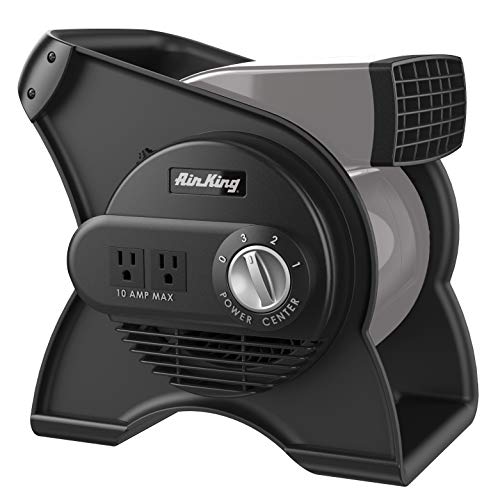
Pivoting utility blower with grounded outlets perfect for any job site

No assembly required—simply place, plug in, and select speed settings to customize airflow intensity. Safe for both indoor and outdoor use with a grounded power cord
How Often to Clean: Your Long-Term Maintenance Schedule
To maintain your recliner effectively, you should clean it regularly according to a set schedule. Vacuum the fabric weekly with an upholstery attachment, or daily if you use the chair heavily, to remove dust and debris. Handle spills immediately by blotting with a dry cloth, and perform a more thorough spot cleaning once a month. Deep cleaning fabric upholstery should be done every six to twelve months using steam cleaning or professional services. For leather recliners, conditioning two to four times a year helps prevent cracks. Applying a fabric protectant spray two or three times annually adds an extra layer of defense against stains. Additionally, lubricate the recliner mechanism every three to six months and tighten any loose parts at least twice a year, such as the footrest bracket and recliner pull handle. Inspect seams and crevices regularly when you vacuum, as these areas collect dust and debris that can damage the fabric and internal mechanisms. Consistent maintenance of electronic components is especially important for power recliners, as their motors and mechanisms are prone to wear from accumulated debris. During your deep clean, take the opportunity to perform a thorough final stability and functionality check, ensuring all mechanisms operate smoothly and the frame remains solid. Following this routine helps prevent deep-set grime, extending the life of your recliner and maintaining its appearance and comfort.