Have you ever struggled to find a comfortable position in your chair without effort? A power recliner might be exactly what you need. It’s an electric chair that lets you adjust your recline easily with the push of a button, offering unmatched convenience and support.
Keep reading to see how this modern invention can transform your relaxation experience.
What Is a Power Recliner?
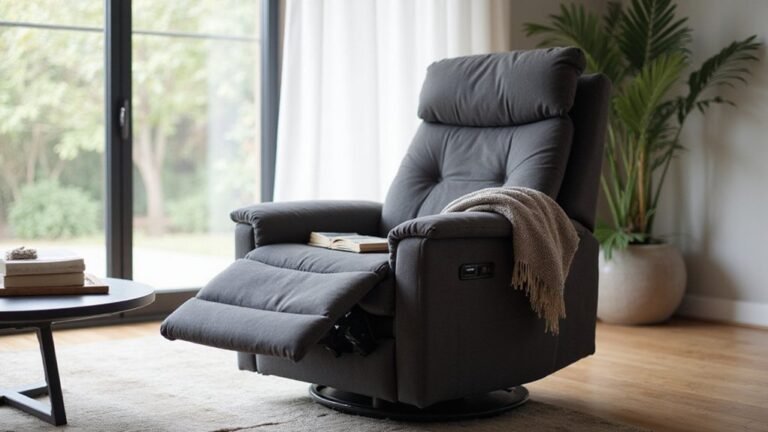
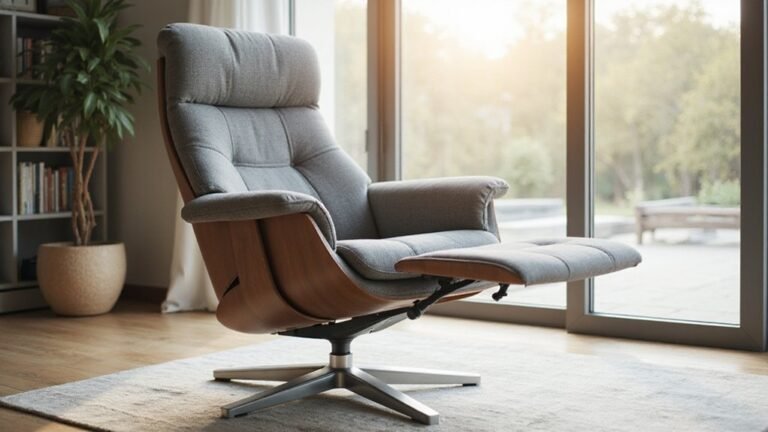
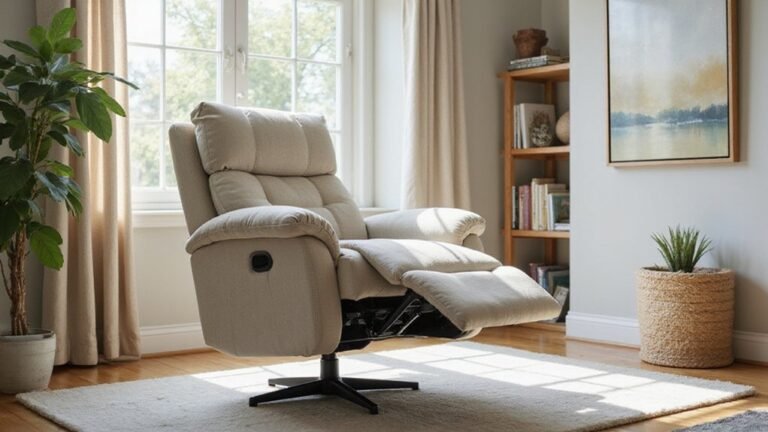
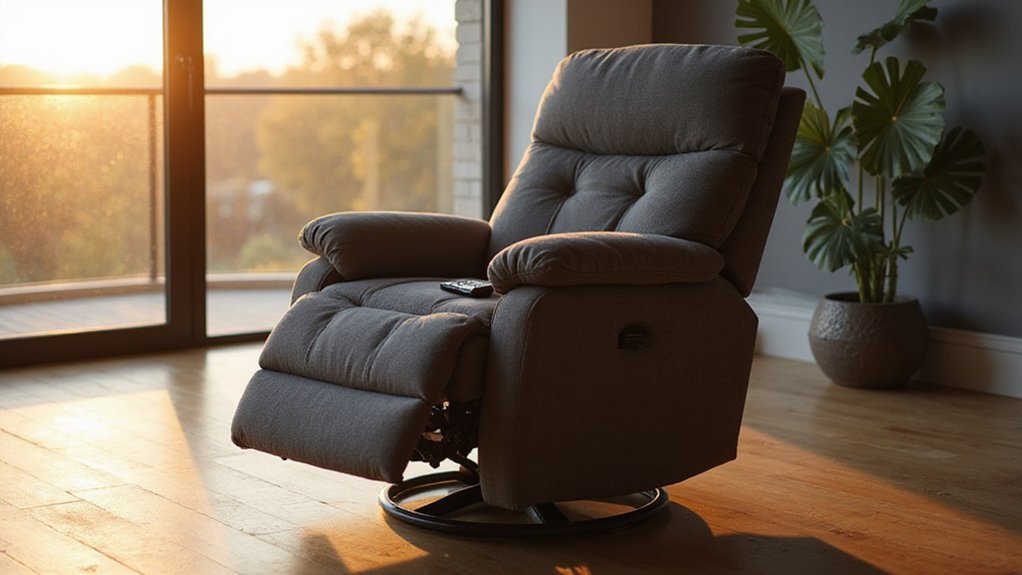
A power recliner is a chair that uses an electric motor, instead of manual levers, to adjust your seating position. You control it with buttons on a remote or the armrest, which smoothly move the backrest and footrest to your preferred angle. This allows for an infinite number of positions, unlike manual recliners that have fixed angles. Because there’s no need to shift your weight or exert physical effort, adjusting your seat becomes effortless. For this reason, professional help is often recommended for more complex issues with electrical recliners to ensure proper function and safety. This is a key difference from manual recliners, which often feature a cable release system operated by a lever to adjust the footrest. Many models also feature a sleek design that complements your room’s decor, along with a variety of fabric options to match your personal style and comfort preferences. Essentially, a power recliner offers modern convenience with customizable comfort at the push of a button. Some manual recliners can be converted to electric operation using a motorized recliner mechanism, though this may not be feasible for all chair models due to structural differences.
How Does a Power Recliner Work?
A power recliner functions through an electric motor built into the chair’s frame, which serves as its primary power source. You activate it using buttons or a remote control, transmitting an electrical signal to the motor. This motor’s rotational force engages internal gears and levers, mechanically moving the footrest and recliner backrest smoothly and quietly. The chair typically contains multiple motors to operate each of its separate recline functions.
The internal components are designed for durability, enabling repeated use without failure. With proper care and maintenance, a quality motor can reliably function for a decade or more. Wires are routed within the chair’s structure, maintaining a clean appearance and preventing accidental damage. When you press and hold a button, the motor moves the chair into your preferred position, stopping precisely when you release it. Troubleshooting common issues often starts with checking the wiring and connections for visible damage. Safety sensors continuously monitor for obstructions, preventing motor strain or sudden movement and ensuring your adjustments are controlled and safe. A careful diagnosis using a multimeter to verify voltage can help isolate electrical problems.
What Are the Key Features and Positions?
Power recliners offer a level of control and comfort that manual options cannot match. You can make infinite adjustments with push-buttons for smooth, quiet movement, allowing you to find the perfect position. This includes options like a zero-gravity setting that relieves pressure on your spine or stopping precisely for activities like reading. Separate motors independently control the backrest, footrest, and headrest, giving you tailored support. Additional features such as massage functions, heat therapy, and USB ports enhance your relaxation experience. Prospective owners should, however, be aware that these sophisticated mechanisms can contribute to a higher initial cost.
The aesthetic design of a power recliner ensures these functions integrate seamlessly, maintaining a sleek appearance. High-quality materials and durable upholstery, such as premium leather or microfiber, guarantee the frame and cushioning withstand frequent use over time. Ergonomic support provided by these recliners reduces physical strain, offering customizable comfort that conforms exactly to your body’s needs. Should issues arise, many common problems with the footrest mechanism, such as those caused by worn lubricant or debris, can often be resolved with straightforward DIY maintenance.

Dual-Motor Power Recliner, 400 lbs Capacity: One motor moves the backrest and footrest together, while the second motor adjusts the headrest independently for customized neck, back and leg support. The 25.6-inch-wide oversized seat fits most adult body types and comfortably supports larger builds.

Power Reclining Comfort for Every Occasion — Easily adjust the recliner from 90° to 160° with the push of a button. Whether you're watching TV, enjoying a football game, reading, gaming, or taking an afternoon nap, this oversized recliner delivers customized comfort in your living room, bedroom, or home theater.
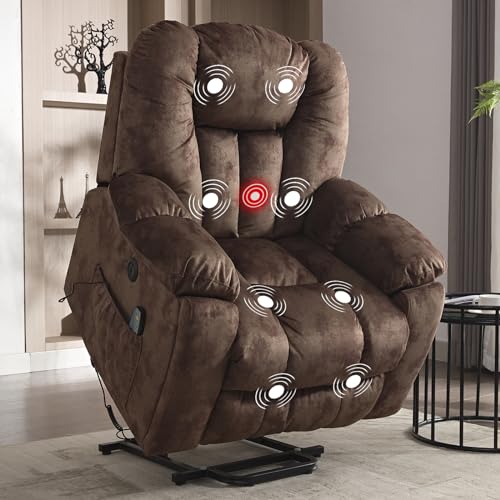
💺Extended Backrest & Deeper Seat: By analyzing the physical traits of big people, we designed a wide power lift recliner chair that is most suitable for most American seniors.The backrest length of 25.6 inches is suitable for most people. The depth of seat 20.9 inches can provide perfect support for your entire hips and legs. Tips: If you have any concerns regarding your health, consult your doctor before using the product.
How Does It Compare to a Manual Recliner?
A manual recliner requires more physical effort to operate than a power recliner. You need to pull a lever or push back with your own strength to recline and lock the backrest and legrest into place. This can be challenging if you have limited mobility or joint issues. In contrast, a power recliner uses quiet electric motors to adjust the position smoothly and independently, without requiring physical effort. The motorized function also allows for finer control over your preferred angle and position, offering infinite reclining positions.
Both types typically share similar frame sizes and upholstery options, but the power recliner’s motor adds weight and increases the overall cost. Additionally, a power recliner needs to be plugged into an outlet and draws a small amount of electricity during operation. For cord-free placement, you can power it with a battery pack instead of a wall outlet. For those interested in custom solutions, a DIY approach allows you to build a chair frame fitted precisely to your needs and space. A manual recliner, however, requires no power at all and relies solely on your strength, making it more portable and easier to use in areas without power outlets. Disassembling either type for moving often involves removing the reclining mechanism from the frame.
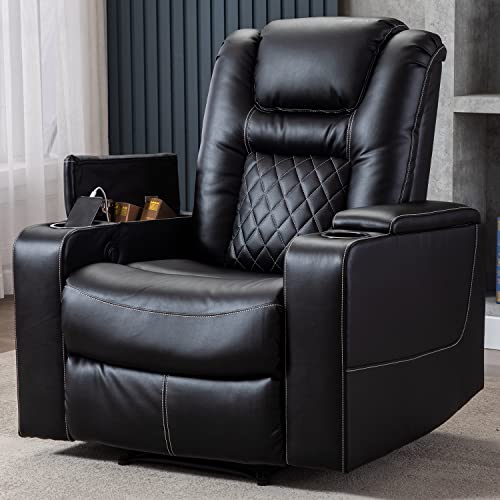
Overall Dimensions: Kindly please confirm the size before buying. Measure 36"W x 35"D x 41"H, Seat Dimensions - 23"W x 23"D, Seat Height - 19", Weight Capacity - 350 lbs.

Power Electric Recliner Chair: Adjust the footrest and backrest easily with two buttons. The breathable PU leather ensures comfort, moisture absorption, and easy cleaning, making it perfect for movie nights, gaming, World Cup soccer match viewing and Father’s Day gift choice for dad, husband or grandpa in your home theater.

Compatibility: Adapter Parameters of Input: AC 100-240V, 2.5A-4A, 50/60Hz. Output: DC 29V, 2.0A, 58W. The interface features a 2-pin connection (one flat and one round), universal with most models of most recliner chairs, electric sofas, lift chairs and message chairs, also compatible with other devices with a 2-pin connection, like standup desks, lift tables, adjustable bed. When making your selection, please pay attention to the product specifications and interfaces
Are Power Recliners Safe and Accessible?
Power recliners are generally safe and accessible when used correctly. They feature obstruction-sensitive mechanisms that instantly reverse movement if they detect a child or pet nearby, reducing pinching or crushing hazards. Their ergonomic design allows for independent adjustment of the backrest and footrest, enabling personalized comfort and better support. It is important to note that for individuals with certain conditions like acid reflux or sleep apnea, a reclined sleeping position can offer therapeutic benefits. Proper placement is crucial; maintaining 18 to 24 inches of wall clearance ensures the chair can fully recline without obstruction. Using non-slip pads under the legs can prevent accidental sliding or tipping. Side-mounted controls are easier to reach and operate, especially for those with limited mobility, and additional features like built-in USB ports can support users who require frequent charging. Durable slipcovers can protect the chair’s upholstery from everyday wear. For optimal function and comfort, you can fine-tune the footrest position to lock it securely for your preferred angle. Always check behind the chair before reclining and follow weight guidelines specified by the manufacturer to ensure safety. Modern models combine these safety features with aesthetic appeal, making them a secure, convenient, and stylish addition to your living space.
What Powers a Power Recliner and How Is It Maintained?
A power recliner receives its energy by plugging its cord into a standard wall outlet. The motor typically uses about 50 to 100 watts and runs on specific DC voltages such as 12V or 24V. Some models feature a hybrid or cordless setup with a built-in rechargeable battery pack. For models with a rechargeable battery pack, this option provides placement flexibility without being tethered to a wall outlet, though it may come at an additional cost. To maintain the battery, you need to regularly charge it using the included AC/DC transformer, paying attention to the indicator lights that show charging status. Ensure your outlet is secure and consider using a surge protection device to prevent voltage spikes from damaging the motor. Additionally, inspect the power cord and connections periodically for wear or damage, and check for any damaged wiring that could be caught in the mechanism. To prevent unwanted movement, you can use non-slip furniture pads under the recliner’s legs. When performing any maintenance, always turn off and disconnect the power supply before handling the transformer or unplugging the recliner, just as you should check the chair’s structural integrity before a reupholstery project.

【Universal Compatible Battery Pack for Reclining Furniture】The recliner battery can works with almost all reclining furniture brand models that use a 2-prong connection-wireless battery pack for Okin, Limos, Berkline, Flexsteel, Etc.

Universal Compatibility for Battery Pack for Reclining Furniture: Our rechargeable recliner battery pack is specifically designed for recliner battery pack rechargeable 2 pin furniture connectors.this universal recliner battery pack rechargeable is perfect for your power recliner, sectional couch, sofa, or recliner chair. Please check your furniture's input before purchasing! (Not compatible with USB, 5-pin, RJ45, or barrel plugs)

【Universal Compatible Battery Pack for Power Recliners】This rechargeable battery pack is compatible with most reclining furniture brands that use a 2-prong (round or flat) connection, including Okin, Limoss, Berkline, Flexsteel, and more. Perfect for power recliners, lift chairs, sofas, and loveseats. Not compatible with 5-pin connectors. Please confirm your furniture’s power interface before purchasing. (⚠️Notice: Charger not included, you need to use the plug that came with the furniture.)
How Do You Set Up and Use Your Power Recliner?
After unpacking your power recliner, ensure you position, wire, and assemble it correctly for safe operation. Place the chair on a flat, level floor near a grounded outlet to prevent wobbling or electrical issues. Uncoil the power cord fully and plug it into the outlet, then securely connect the internal motor wiring as per the manufacturer’s instructions. Assemble any frame components by attaching brackets with cotter pins or bolts, tightening all fasteners firmly to avoid instability during use. When removing packaging, carefully remove all staples from the box and dispose of them safely.
Immediately address upholstery maintenance by aligning cushions carefully with the frame to prevent snagging or accelerated wear. Test the recliner’s features by pressing the control buttons to activate the footrest and recline functions, confirming all movements operate smoothly and safely. For optimal safety and performance, it is advisable to plug your recliner into a surge protector. Finally, bundle any loose cables away from moving parts and mechanisms to avoid tangling or damage during operation. A broken reclining mechanism can often be diagnosed by inspecting for stuck cables or broken parts. For ongoing maintenance, regularly vacuum the chair to keep debris from interfering with moving parts and to prolong fabric life.

【6 USB Fast Charging Station】Compare with other 15W power strips, the purple charging station provide 3 usb-c for Apple devices, each USB-C port delivers up to 5V/3.1A 15.5W, all usb ports output is 5V/4.8A, 24W max. Multiple usb charging station with smart charging technology, it can automatically detect your connected devices and can achieve faster charging efficiency, which would charge your devices WITHOUT a variety of converters.

Patented 360 Degree Rotating Flat Plug: Built with a swivel low profile plug(0.73in thickness), the flat extension cord provides convenient access to any weird wall socket from any direction. Especially useful in confined areas. US Utility Patent No.: 11901685

Patented 360 Degree Rotating Flat Plug: Built with a swivel low profile plug(0.73in thickness), the flat extension cord provides convenient access to any weird wall socket from any direction. Especially useful in confined areas. US Utility Patent No.: 11901685
How to Choose the Right Power Recliner for You
Choosing the right power recliner depends on accurately assessing your body, space, and desired features. First, ensure the chair fits by comparing its seat dimensions with your leg length and hip width. For optimal support, the seat height should allow your feet to rest flat on the floor, and the width should comfortably accommodate your hips without feeling tight.
Next, measure your space carefully. Allow at least 3 inches behind and in front of the recliner to ensure full movement when reclining. Keep in mind that a larger chair might offer more comfort but needs ample room to function properly.
Consider the features you want, such as style options—leather, fabric, or microfiber—and prioritize material durability based on your household’s activity level. Confirm the chair’s weight limit can support you safely, and review the warranty details, paying special attention to the motor coverage.
Lastly, opt for a reputable brand known for quality and reliability. Decide whether you prefer basic models with smooth electric adjustments or advanced options like built-in massage or heat functions. Always verify that delivery includes setup services to ensure your recliner is ready to use without hassle.

【EFFORTLESS POWER LIFT AND RECLINE】Enjoy the ease of adjusting your chair with the included remote control. Effortlessly control the electric lift function, as well as the heating and massage features, allowing you to personalize your comfort at the touch of a button. This feature is particularly beneficial for elderly users or anyone requiring mobility assistance

【Power Lift Assistance for Mobility】This Power Lift Recliner Chair for Elderly is equipped with a motor that assists users in moving from a seated to a standing position. Operated by a remote control, it provides steady support for those seeking an electric lift chair. The unit functions as a reliable power lift chair for users requiring mobility assistance, and it is also compatible with lift chairs for elderly needs.

Power Lift Recliner Chair – Elevate your relaxation with the power recliner chair. This advanced lift chair features seamless power lift assistance—effortlessly raising you to a standing position—and infinite electric recliner angles up to 135°. Integrated vibration massage and targeted lumbar heating transform this lift chair into the ultimate comfort haven for seniors.