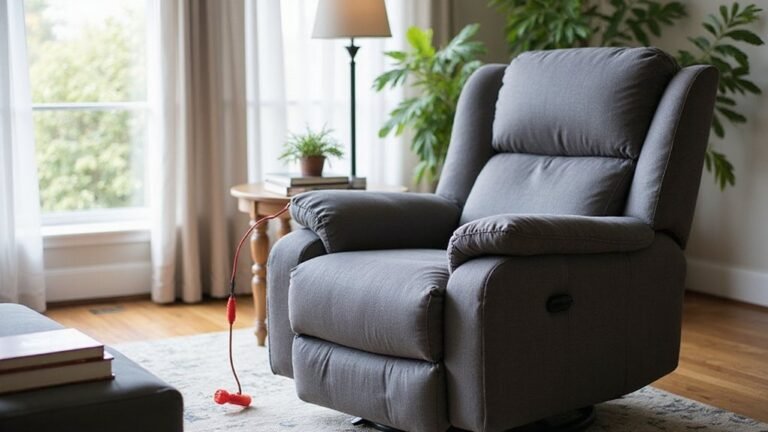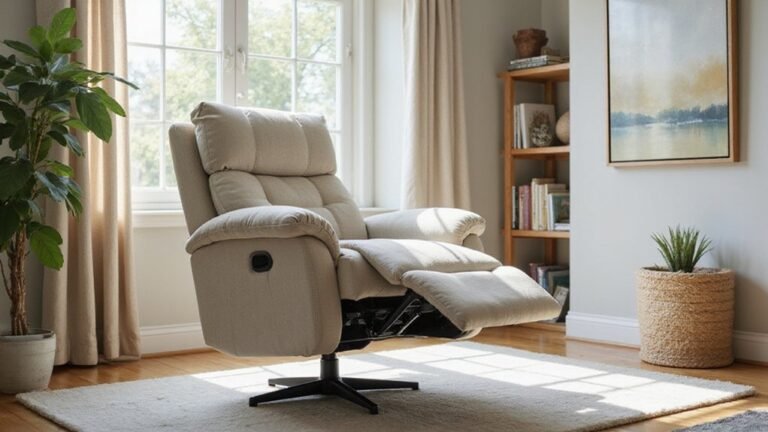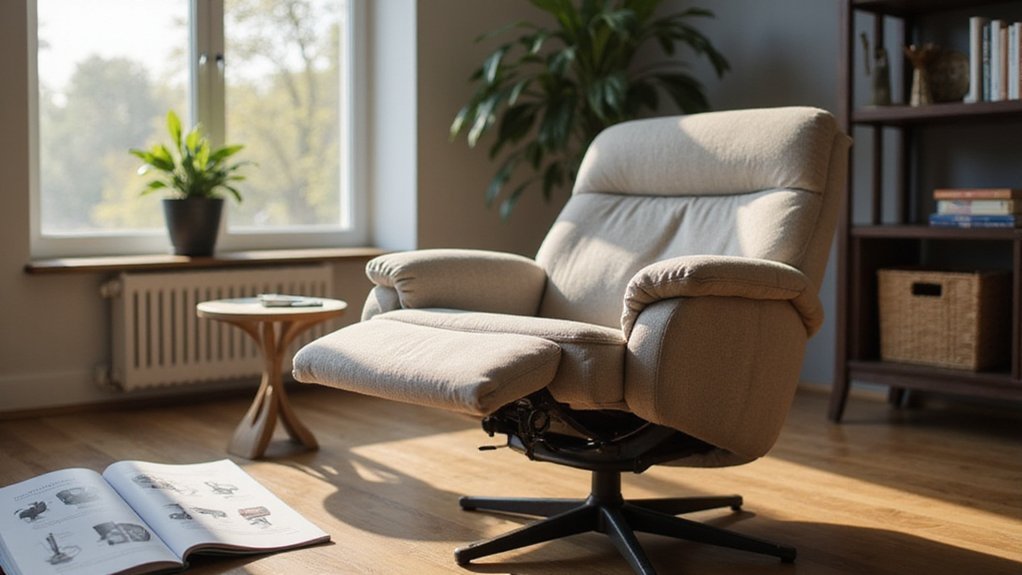
Ever wonder how power recliners smoothly adjust at the push of a button? These chairs pack a tiny but powerful motor that makes reclining and lifting effortless.
By understanding how their electronics work, you’ll see just how clever these chairs really are. This guide will walk you through everything you need to know about power recliner technology.
What Makes It Move? The Electric Motor Inside Your Power Recliner
An electric motor inside your power recliner works by converting electricity into a spinning mechanical motion. This rotation powers a system—like a threaded push rod—that extends or retracts to move the chair’s back and footrest. To lift and lower heavy components smoothly without straining, the motor requires sufficient motor torque. Gear mechanisms, specifically a gearbox attached to the motor, reduce its speed while significantly increasing its output torque. This gear reduction allows the motor to generate the force needed to handle your weight and resistance, making reclining effortless and quiet. For complex repairs similar to those on a manual recliner, it is often advisable to seek professional help. In the event of a power failure, a battery backup system can provide temporary operation to adjust the chair’s position. For replacement, the motor’s connection type, such as five-pin connections, is a key factor in ensuring compatibility. Should you need to service the motor or surrounding electronics, you may first need to remove the back panel to safely access the internal components.
How Your Power Recliner Draws Electricity From the Wall
Your power recliner draws electricity directly from a standard household outlet through its power cord. The outlet supplies high-voltage AC current, typically 110-120V or 220-240V depending on your region. A transformer on the cord then converts this high-voltage AC to the low-voltage DC required by the motor, which enhances energy efficiency. The motor consumes about 40 to 200 watts mainly when moving the reclining features. Properly connecting the cord to a grounded wall socket ensures a steady and safe electrical flow into the chair’s motor system, avoiding safety hazards from extension cords or unstable power sources. Before undertaking any electrical work, it is wise to perform a structural integrity check on the chair frame. Consider the scale and proportion of your furniture to maintain a balanced and harmonious room layout around the recliner. If you ever need to disconnect the chair for moving or repair, always remember to unplug the power cord first to prevent electrical damage or shock. As an alternative to this wired connection, a rechargeable lithium-ion battery can be installed to provide cordless operation and eliminate trailing cables.
Controlling Your Power Recliner: Buttons, Remotes, and Apps
Your power recliner is controlled through buttons, remotes, or apps since it draws electricity from the wall. The integrated buttons directly operate the chair’s core mechanics; you hold one to recline or adjust and release it instantly to stop. For a power recliner that fails to move, troubleshooting often begins with the switch control and its connections. Advanced remotes often feature toggle switches that allow you to independently fine-tune the backrest and leg rest positions, and may include buttons to save and recall memory positions. They can also control specialty features such as massage modes, heat settings, and intensity levels. Some models offer app connectivity, which lets you customize control settings or operate the chair using voice commands for a hands-free experience. No matter which interface you choose, releasing any control immediately stops the motors, locking the chair’s position. To support good posture and back health, ensure your chair is adjusted so your back is fully supported and your feet rest flat on the footrest. If a control fails to operate the chair, you should first check the power supply and its connections. The chair’s transformer is plugged into a surge-protected outlet, with a green power light indicating that the system is active and ready for use.

Wide Compatibility: Replace your lift chair remote effortlessly! Designed with a universal 5-pin circular plug, this power lift recliner control works with most brands using a 5-pin connector. Perfect for power lift chairs, medical recliners, and home theater seating

Slim Black 2 Push Button 5 Pin Remote Hand Control for Up and Down

-Before Purchase Note- Please ensure your chair is compatible with this remote: 1) Check if the button icons match your original remote. 2) Verify your chair use a straight round male 5-pin plugs, as same as shown in the product image. 3) Confirm the remote's model number is DL-SK-109-2-002 same as your original.(This remote is compatible with the Ashley1090012 or a direct replacement for the HSW304 4-button remote controller. Incompatibility may cause the remote control not to work with your chair)
Built-In Safety Features That Protect You and Your Chair
Power recliners feature several built-in safety components that prioritize your protection. Safety sensors are crucial; they detect obstacles like furniture or pets and automatically stop or reverse the chair’s movement to prevent pinching or injury. An emergency stop button provides immediate control, allowing you to halt the chair instantly in case of emergency. Insulated wiring and grounded plugs ensure electrical safety by reducing the risk of shocks. Lockout mechanisms, such as child safety locks on remotes or panels, keep the chair from being operated unintentionally by children or pets. The structural integrity is maintained through a defined weight limit and tip-resistant engineering, enhancing stability and preventing tipping accidents. For maximum safety on smooth floors, additional non-slip rug pads can be placed under the recliner base to prevent sliding. Some models also include battery backup systems, which allow you to return the chair to an upright position safely if the main power is lost. This feature is particularly helpful for users who sleep in the chair regularly, as improved breathing is one reason some individuals choose a recliner over a bed, and it can also aid proper body alignment for comfort during extended rest periods.
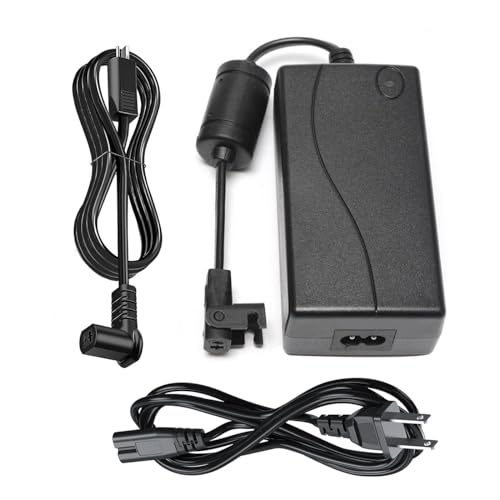
【COMPATIBLE WITH】: lojiraz recliner power supply is fully compatible with most recliner sofa brands. Such as OKIN, Limoss, Lazboy, Pride, Catnapper, Ashley and Tranquil Ease Lift Chair, Cheers electric sofa, BetaDrive, and DeltaDrive Motors. It's almost compatible with all recliners and sofas on the market.

【COMPATIBLE WITH】 : Power recliner power supply with electric recliner power cord for OKIN, Limoss, Pride, Golden, Lazboy, Berkline, Med-lift and Tranquil Ease Lift Chair, Cheers electric sofa, Power Recliner DeltaDrive and BetaDrive Motors with a two pin (flat & round) connection to the the motor.
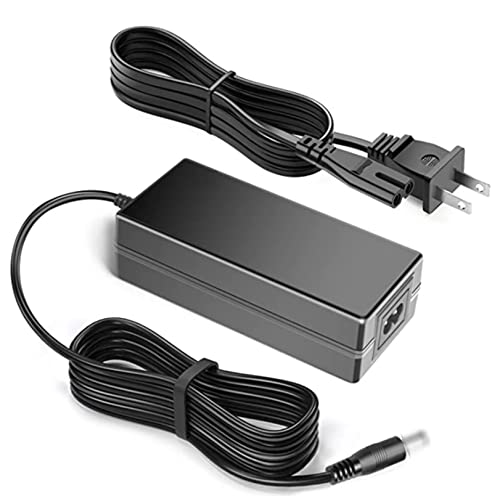
100% Brand New, High Quality AC Power Charger (non-OEM)
How to Troubleshoot Common Power Recliner Problems
If your power recliner stops working correctly, you can often fix the issue yourself by following a logical troubleshooting process. Start by checking the basics: ensure the chair is plugged into a working outlet and examine the power cord for any visible damage. If the chair has a battery backup, verify that it is fully charged. For chairs with preset memory functions, ensure these aren’t preventing the controls from responding. Next, inspect the wiring beneath the chair, pushing in any loose connectors you find. An important step is to check the transformer by pressing its button to verify the green indicator light is lit, confirming power is reaching it. Listen carefully to the motor when you activate the controls; unusual sounds could indicate a mechanical problem. Check for any obstructions in the reclining mechanism that might prevent movement, which can include debris accumulation or mechanical misalignment. Regular motor maintenance, like lubricating pivot points, can help prevent stiffness, and using a silicone-based lubricant on moving parts is recommended for smooth operation. If the problem persists, unplug the chair for about twenty minutes to reset its electronics. A thorough check of the power source, controls, and mechanical parts usually gets the recliner functioning again.