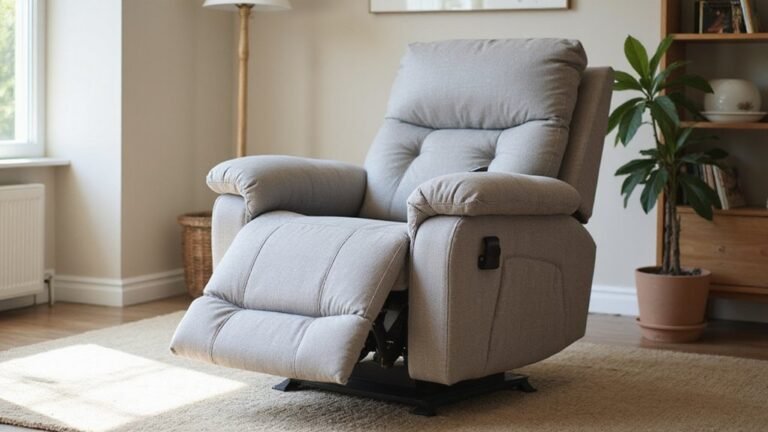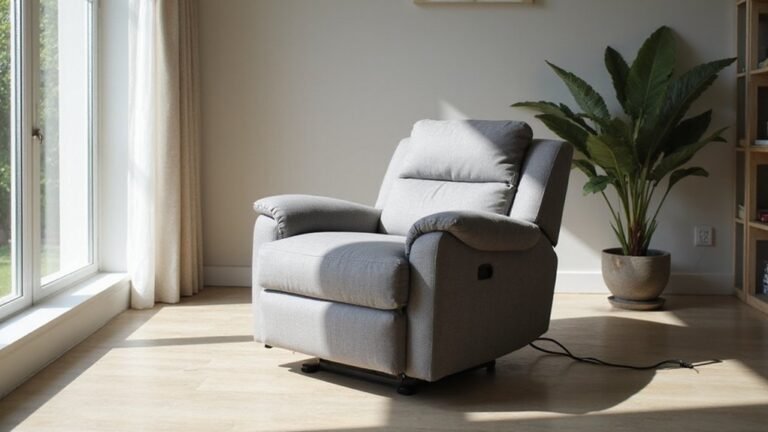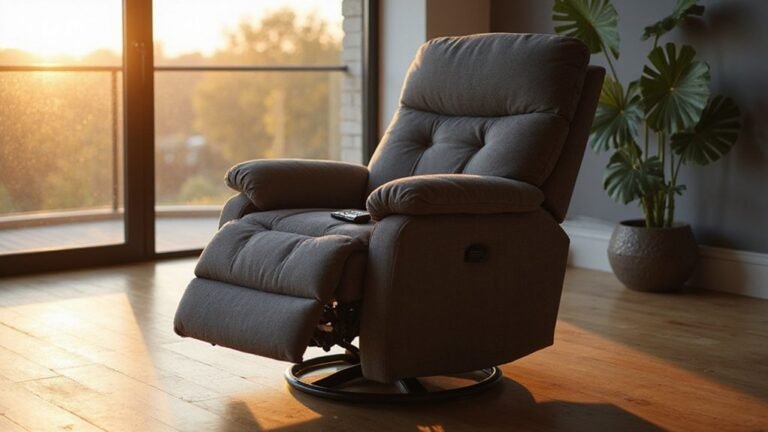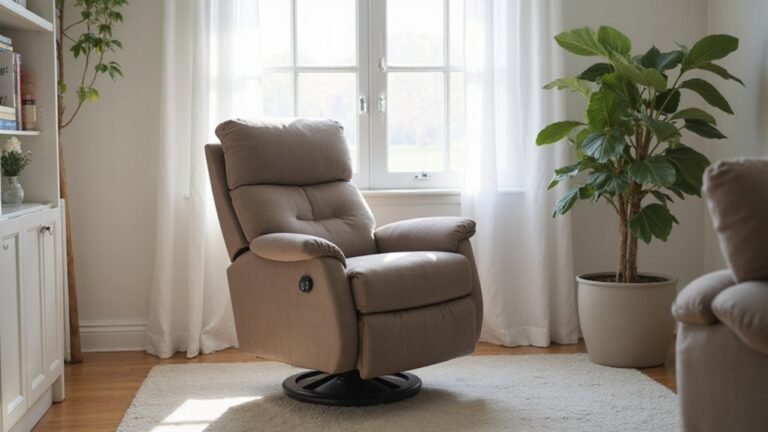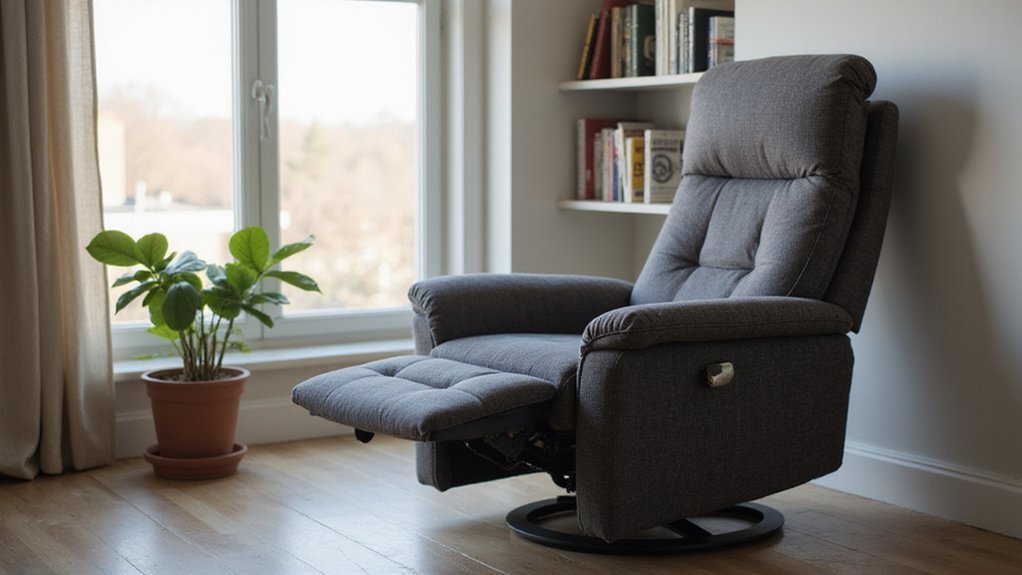
If you’re short on space but still want a comfortable recliner, a wall-hugger might be exactly what you need. These chairs only require a few inches from the wall to fully extend, making them perfect for smaller rooms.
Their clever design keeps you close to the wall while still offering full relaxation. Here’s how they work and what makes them a smart choice for tight spaces.
What Is a Wall-Hugger Recliner and How Is It Different?
A wall-hugger recliner is designed to fully recline while sitting just inches from the wall, usually needing only about 4 to 6 inches of clearance. This is a significant difference from standard recliners, which often require a foot or more of space behind them. The key feature that allows this is the mechanism that moves the seat forward as the chair reclines, instead of tilting backward. Many modern power models include features like height adjustment mechanisms for customized comfort. If a wall-hugger malfunctions, repairs may require inspecting the reclining mechanism behind panels to diagnose issues with rods or cables.
When choosing a wall-hugger, consider the durability of the fabric to ensure it withstands long-term use without tearing or fading. It is also important to select an appropriate upholstery material like microfiber or leather based on your lifestyle needs. Additionally, compare comfort levels by testing the padding and support, making sure it matches or exceeds that of more traditional, bulkier models. This type of recliner is ideal for small apartments, cozy living rooms, or any space where maximizing floor area is a priority.

Premium Home Theater Seating Experience - Transform your living room into a luxury cinema with our premium home theater seating. Designed for movie lovers, our theater seating recliner offers the perfect balance of comfort and style, creating an immersive viewing experience for you and your loved ones. Picture this: the lights dim, the movie starts, and you sink into plush cushions that cradle your body in perfect relaxation.

【Space-saving Wall Hugger】Maximize your space with our innovative zero wall recliner! The seat glides forward as it reclines, maintaining no gap from the backrest to the wall. Perfect for small spaces like apartments, RVs, or cozy living rooms,blending comfort, style, and functionality effortlessly

【Zero-Gravity Experience】Korser Zero-Gravity power recliner features an ergonomic design that takes relaxation to an entirely new level. As the backrest reclines, the footrest smoothly elevates your legs above heart level—promoting blood circulation, alleviating daily stress, and providing a deeply relaxing experience. This ergonomically designed recliner blends scientific support with exceptional comfort, turning into a restorative escape. It's a healthy lifestyle choice.
How Does a Wall-Hugger Recliner Actually Work?
A wall-hugger recliner works through a coordinated forward-gliding track mechanism. When you activate the lever or motor, the seat base slides forward on a built-in track. Simultaneously, pivot joints allow the backrest to tilt backward while the footrest extends outward. This synchronized movement shifts your body’ s weight forward, creating the necessary space for reclining without pulling the chair away from the wall. The backrest remains stationary relative to the wall, maintaining a sleek look and saving space. Common operational issues can often be resolved by checking for loose wiring or a faulty connection. This intelligent design offers ergonomic benefits by supporting multiple sitting positions with minimal effort, while the stable back provides a clean, modern profile that keeps the room visually open. The chair utilizes a single motor mechanism that coordinates the movement of both the back and leg rests in one seamless motion. With attentive upkeep of its electronic parts, a high-quality motorized recliner can provide reliable service for a decade or more. In the event of a power outage, restoring function may require accessing the reset button with a paperclip.
The Measurable Space Savings: Clearance and Layout
Wall-hugger recliners require significantly less clearance than traditional models. While a standard recliner needs about 12 to 18 inches of space behind it to fully recline, a wall-hugger only requires 3 to 6 inches. This is possible because of its forward-gliding mechanism, which allows the seat to move forward as it reclines, keeping the backrest close to the wall. As a result, you gain a more compact footprint, making it easier to fit into smaller or limited spaces. Always check the fully extended length of a model, especially for power versions, which typically reach 60 to 68 inches. Some advanced models utilize a seat slide mechanism to achieve full recline with clearance as little as under three inches. This space-efficient design frees up valuable floor area and helps you create a more open and functional room layout. If unwanted motion is a concern, applying non-slip furniture pads can also help stabilize its position. For those recovering from surgery, the ease of a power recliner mechanism can be particularly beneficial when operated with a side lever, reducing strain during use, and routine cleaning or moving is also simplified with an easy back panel removal.

MAXIMIZE YOUR ROOM - Ideal for those seeking small recliners for small spaces, this zero wall recliner chair requires only 4 inches of wall space to fully recline

【Infinite Positions Power Recline】 Enjoy smooth, quiet power reclining from 100° to 160°, with the flexibility to stop at virtually any angle. Whether you're reading, watching TV, using your phone, or taking a nap, this power recliner lets you find the position that feels right for you. Measuring 35.4"D x 31.9"W x 42.9"H and extending to 63.4"L when fully reclined, it's a comfortable fit for living rooms, bedrooms, and RVs.

Space-Saving Wall Hugger for Real Homes: Wall-hugger mechanism designed for small spaces where every inch matters—place it close to the wall, in a corner, or in compact living rooms, bedrooms, and RVs. With only 1.4" wall clearance, the chair slides forward as it reclines instead of pushing back like traditional recliners, so you get full relaxation without wasting space behind it
Why Wall-Huggers Are Ideal for Apartments and Small Spaces
The space-saving design of wall-huggers directly addresses the limitations of apartments and small spaces. Their forward glide mechanism eliminates the deep rear clearance required by standard recliners, preventing obstruction in narrow walkways. This allows you to maximize your available floor area, which is especially important in compact living rooms. You gain extra square footage and avoid layout cramping, even in a studio apartment. The design flexibility of wall-huggers enables you to place furniture in tight alcoves or corners without sacrificing comfort or function, and can be a helpful alternative for finding a comfortable reclining angle. For renters and those who frequently move or reconfigure their space, wall-huggers offer versatile placement options. Their compact footprint also helps maintain an uncluttered, elegant aesthetic by fitting more chairs into shared areas without overcrowding. Should a repair ever be needed, you can often inspect and tighten screws yourself using basic DIY principles, but a complete repair may require following a detailed disassembly guide to safely access the internal mechanism.

Zero-Clearance Wall Hugger Design: Advanced zero-wall technology lets this recliner fully recline with just 2-3 inches of wall clearance—no 1-2 feet of space needed! Perfect for small living rooms, apartments, RVs, and media rooms, maximizing usable area without sacrificing comfort

Modern Style with Lasting Support: Designed with clean, modern lines and softly rounded contours, this manual recliner chair brings a fresh look to any living space. The generously padded armrests offer plush cushioning that retains its shape, while the backrest's conforming fiber fill helps reduce lower back strain during extended sitting. The thick seat cushion absorbs pressure evenly, making it comfortable for reading, watching TV, or simply resting. Premium stitching and refined edging demonstrate consistent quality throughout.

True Zero-Wall Design for Compact Living: Perfect for apartments, RVs, or cozy living rooms where space is at a premium. Unlike traditional recliners, this chair glides forward as it reclines, extending to just 61 inches fully reclined. With zero wall clearance needed, it can be placed directly against the wall, allowing you to enjoy a full range of motion without damaging your walls or wasting floor space
Should You Choose a Manual or Power Wall-Hugger Recliner?
Choosing between a manual or power wall-hugger recliner depends on your preferences for effort and convenience. Manual recliners operate using levers and rely on your body weight to activate the reclining mechanism. They are generally simpler and more affordable, making them a good choice if you want a basic, low-cost option. Their mechanical systems tend to be durable and require minimal maintenance, but they do involve some physical effort to adjust. Limited available positions are a key consideration, as manual mechanisms typically offer only sitting, footrest extended, and fully reclined settings. A broken recliner pull cable is a common issue that can be repaired economically with simple tools.
Power models, on the other hand, use quiet motors controlled by a remote. They allow you to change positions effortlessly without exerting physical effort, which is especially helpful if you have mobility limitations or prefer a more convenient experience. These seats often feature adjustable settings like lumbar support and multiple reclining positions, offering greater customization. However, power recliners tend to be more expensive and require an electrical outlet, so you’ll need to consider your space and whether the extra features are worth the additional cost. For manual models, a thorough recliner mechanism inspection can help maintain their simpler systems. Before attempting any internal maintenance or adjustment, it’s wise to first perform a structural integrity check of the chair’s frame and moving parts.
In the end, your choice should balance your budget, desired comfort features, and willingness to exert physical effort.

Zero-Gravity Experience: The Korser Zero-Gravity Recliner features an ergonomic design that seamlessly blends scientific relaxation with comfort. Unlike traditional recliners, as the backrest reclines, the footrest smoothly elevates your legs—positioning your feet above heart level—to effectively promote blood circulation, alleviate stress, and deliver a deeply relaxing experience. It is more than just a way to relax; it represents a healthy lifestyle choice.
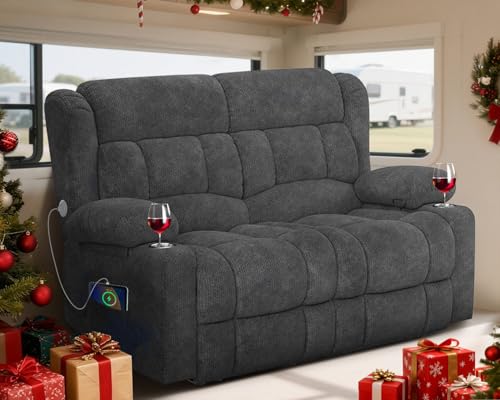
Space-saving RV Sofa - MisUMis RV loveseat recliner is the ideal choice for those who love adventure and explore! Easily switch to RV recliner, perfect use of limited space as RV essentials. Makes your long trips or short camping adventures more comfortable and cozy
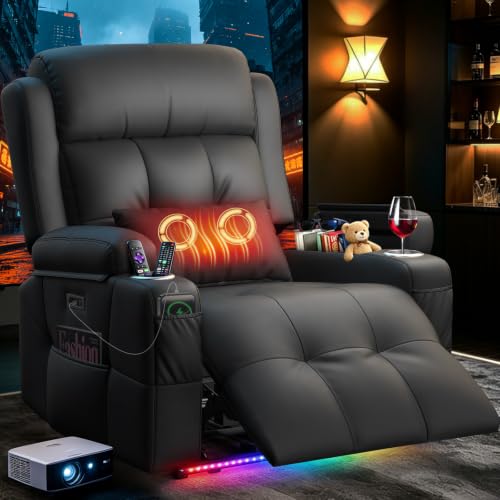
Rapid Carbon Fiber Heating: Advanced carbon fiber heating technology warms from 59°F to 131°F in just 10 seconds and reaches 154°F within 45 seconds for fast, powerful warmth. Built-in smart temperature protection automatically shuts off above 158°F and resumes heating at 113°F, ensuring safe, stable, and comfortable performance. Compared with traditional polyester heating elements, carbon fiber delivers 83% greater heating efficiency for quicker heat-up and more effective warmth—keeping you cozy all autumn and winter long
How to Shop for a Wall-Hugger: Features and Fit Checklist
To ensure your wall-hugger recliner fits your space and meets your comfort needs, pay close attention to specific features. The crucial factor is verifying it has the proper forward-glide track system, which requires only a few inches of rear clearance—ideal for tight spaces. Check that the frame is made of solid hardwood for durability and stability. The padding should consist of high-density foam, offering support over time without sagging. Upholstery materials should be durable and easy to clean, ensuring long-term support and decor compatibility. If the recliner is motorized, its power consumption will typically be modest, comparable to other small appliances.
Measure your room carefully before purchasing, especially the front clearance, to accommodate the extended footrest comfortably without obstructing pathways. Consider the chair’s dimensions and ensure enough space for easy circulation. Finally, ask the retailer or manufacturer for maintenance tips relevant to the chair’s materials, such as cleaning instructions for the upholstery and frame care. Confirm that the construction avoids plastic in critical, load-bearing mechanisms, as this impacts durability and repairability over the years, so inquire about using metal parts instead to prevent bending under stress. It’s also useful to understand common assembly points, as some designs may use locking spring clips and brackets to secure key components.

[Wall Hugger for Small Spaces] Maximize your room layout with our smart wall hugger recliners for small spaces. Requiring only 0.4" of clearance from the wall to fully recline, the seat intelligently glides forward. Perfect as an RV recliner or for cozy apartments, it delivers full relaxation without eating up your valuable floor space.

【Space-saving Wall Hugger】Maximize your space with our innovative zero wall recliner! The seat glides forward as it reclines, maintaining no gap from the backrest to the wall. Perfect for small spaces like apartments, RVs, or cozy living rooms,blending comfort, style, and functionality effortlessly

【True Zero Wall Hugger Recliner – 0” Clearance Required】 Unlike traditional recliners, this loveseat features a true zero-wall design, requiring 0 inches of clearance from the wall to fully recline. Perfect for RVs, travel trailers, motorhomes, or small apartments, it saves maximum space while delivering full reclining comfort. A compact wall hugger recliner loveseat that fits flush against your wall.