Have you ever wondered how the comfy recliner evolved from simple wooden chairs into the versatile pieces we enjoy today? The journey spans over a century, starting with basic adjustable seats and leading to high-tech, multi-functional chairs.
The story behind this transformation is full of interesting twists you won’t want to miss. Keep reading to discover how recliners became the living room staple they are now.
What Defines a Modern Reclining Chair?
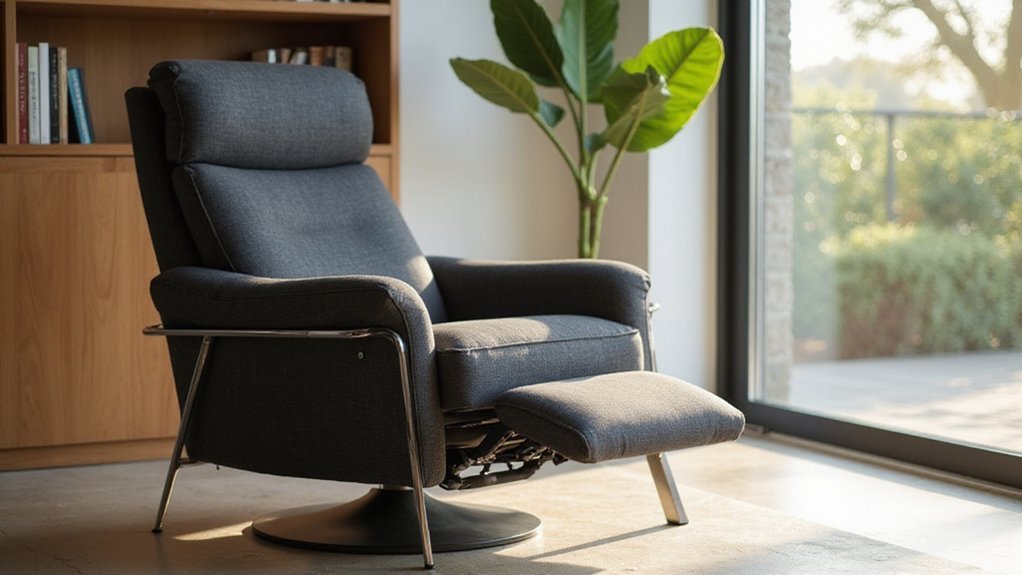
Modern reclining chairs are characterized by their sleek design and advanced comfort features. Unlike bulky, traditional models with manual levers, these chairs offer adjustable backrests that tilt from 90° to 120°, allowing you to find a relaxing position. They often include zero-gravity recline, which elevates your legs to improve circulation and reduce pressure on your spine. The footrest extends automatically, enabling seamless transitions between sitting and lounging positions, while multiple locking angles let you customize your comfort. Even with automated features, understanding the basics of the reclining mechanism is helpful for troubleshooting or simple maintenance.
Ergonomics plays a central role in modern designs, with built-in lumbar support that preserves spinal health and reduces fatigue. Aesthetic appeal is also a priority, featuring clean lines, minimalist profiles, and neutral fabrics that complement various decor styles. Material choice is deliberate: high-density foam provides optimal support without losing shape over time, and durable metal frames ensure stability and support for years of use. Long-term stability relies on a correctly assembled recliner frame during the initial setup. It is also prudent to prioritize models equipped with a manual override feature or battery backup to ensure functionality during a power outage. Overall, modern recliners blend functionality with stylish simplicity, making them versatile additions to your living space.

👍【Premium and Durable Material】Removable, durable and washable recliner Pillow cover made of high quality Textilene fabric, resists fading in direct sunlight. Offering a breathable, cool feel yet comfortable support of your neck or your lower back.
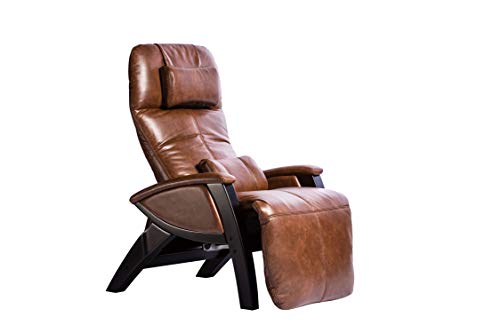
Svago ZGR Plus SV-395 Dual Power Infinite Position Zero Anti Gravity Recliner with Heat and Massage
Who Actually Invented the Modern Recliner Mechanism?
The invention of the modern recliner mechanism was a gradual process involving multiple innovators. Henry Kennedy’s 1841 patent was among the earliest, introducing a spiral spring that allowed the seat and back to move smoothly, rooted in skilled craftsmanship. Over the next century, cousins Edward Knabusch and Edwin Shoemaker developed the wooden hinge design in 1928, which formed the foundation of the reclining function. Shoemaker’s engineering was key in creating a unified movement for reclining seats. Later, the addition of artistic upholstery transformed this mechanism into the plush La-Z-Boy recliner we recognize today. Post-World War II, engineer Daniel Caldemeyer refined the system further by adding smoother, spring-loaded actions and features like retractable footrests. In the decades that followed, these innovations evolved into the power recliner mechanisms that now dominate the market, featuring integrated motors and electrical systems. These advanced systems often utilize dual power recliners for independent backrest and footrest control. If reassembly is needed, proper organization of the removed hardware and documentation of component placement is essential. Overall, the modern recliner mechanism is the result of combined innovations spanning over a century, each building on the previous advancements.
How Did the Morris Chair Introduce the Idea of Adjustable Comfort?
The Morris Chair introduced adjustable comfort through its manually reclining backrest, a novel feature at the time. You could change the angle of the backrest by moving wooden pegs within notches on the frame, then locking it into place for stability. This simple hinge mechanism separated the seat from the back, allowing you to personalize your seating position for better ergonomic support. Its deep seat and independent cushions further enhanced relaxation by accommodating individual preferences. Modern power recliners simplify adjustment but still rely on a similar foundational reclining mechanism for their movement, now often enhanced with a motor-driven system for effortless control. When selecting a recliner today, it’s important to consider its scale and proportion relative to other furniture to ensure it complements rather than overwhelms the room. Beyond its functional design, the chair’s aesthetic, featuring open oak side rails, reflected the handcrafted ideals of the Arts and Crafts movement, often employing through-tenon joints and quartersawn white oak to highlight the wood’s natural grain. Produced by William Morris and Company, this chair became a popular example of how utility and craftsmanship could combine, introducing the concept of adjustable comfort to everyday seating.
What 1850 Prototype Paved the Way for the Modern Recliner?
The 1850 prototype camp bed introduced a versatile steel-framed seat that could transform from a chair into a bed or lounge, paving the way for modern recliners. Its design addressed practical needs for portable, multi-functional furniture used in military field conditions. Features like its simple adjustable back, padded armrests, and sturdy frame set a foundational blueprint for the evolution of reclining furniture. This innovation was so effective that it moved beyond military use, even gaining favor among royalty under Napoleon III, demonstrating that utility and comfort could go hand in hand. Its fundamental mechanics directly influenced later furniture designers, establishing a clear connection from this early camp bed to the comfortable recliner we recognize today, with later models offering specialized comfort through lay-flat recliners and other advanced forms. Later innovations would also focus on integrating the chair’s mechanics seamlessly into the home, leading to modern solutions like clever cord management for powered models and methods for preventing sofa sliding to keep the furniture securely in place.
Did Ancient Cultures Have Anything Like a Recliner?
Ancient cultures from Mesopotamia to Rome had furniture designed for lounging in comfort, akin to modern recliners. Egyptian tombs from around 3000 BC reveal chaise longues, which were used for reclining and relaxation. Mesopotamian “kline” couches served similar purposes for dining and socializing. The Greeks improved upon these with ergonomic klismos chairs and cushioned kline couches, often seen during their symposia. Hieroglyphics and tomb art depict these forms clearly, emphasizing their association with high status, royalty, and elites. Romans adopted and adapted these styles, using daybeds and built-in benches with rope webbing, animal-carved legs, and luxurious cushions, resulting in an ancient version of your favorite recliner. Should such an ancient piece need repair, one might have had to understand its detaching the back from the main frame. The longevity of a recliner has always depended on the quality of its construction and materials. When such a chair fails to operate today, the first step is checking the power supply using a method like verifying voltage output with a multimeter.
How Did La-Z-Boy Evolve From a Porch to a Living Room Staple?
The La-Z-Boy recliner initially started as an outdoor chair before becoming a living room staple. In 1928, Knabusch and Shoemaker designed a wooden porch lounger with slats that could fold for easy storage. A salesman’s suggestion to use it indoors led to a major transformation. By 1929, they upholstered the structure, turning it into a comfortable piece suitable for living rooms, a process that required careful attention to fabric selection for durability and comfort. They held a naming contest, and “La-Z-Boy” emerged as the perfect name, conveying the chair’s promise of ultimate comfort and relaxation. Inspired by Adirondack silhouettes, their early designs focused on health benefits and simple mechanical reclining. These early manual mechanisms were generally reliable, but like all recliners, they could develop issues such as a faulty locking mechanism. The early model, priced at $45.35, featured a clever wooden mechanism that allowed the seat to move forward as you leaned back, making it more ergonomic and user-friendly, and this focus on ergonomics aimed to help users avoid prolonged poor posture that can strain the back. Although initial sales were modest, this version laid the foundation for the brand’s identity and future innovations in recliner technology.

Oversized Recliner Chair: This manual recliner features an adjustable backrest ranging from 120° to 150°, allowing you to switch between upright sitting, casual lounging and relaxed reclined positions. Oversized padded seat and segmented back cushion fit the natural curve of your body, ideal for reading, watching movies or daily unwinding at home

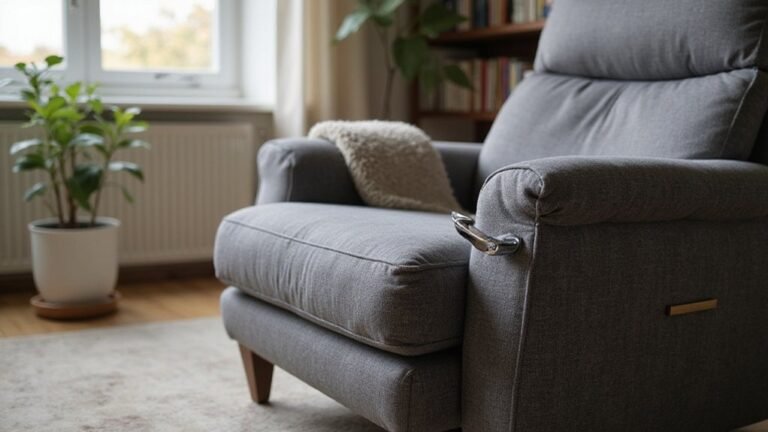
【Comfortable Push Back Recliner】Relax in style with our wingback recliner, padded cushion that’s both durable and soft to the touch. Featuring elegant rivet detailing, this small recliner chair for small space reclines smoothly from 110° to 160°. Lean back using your body weight to extend the footrest, or press it down to return. This recliner chair measures at 31"W x 30"D x 40"H, Seat Height - 19", Seat Dimensions - 22"W x 22"D, Weight Capacity - 350 lbs. Perfect as an apartment recliner chair.

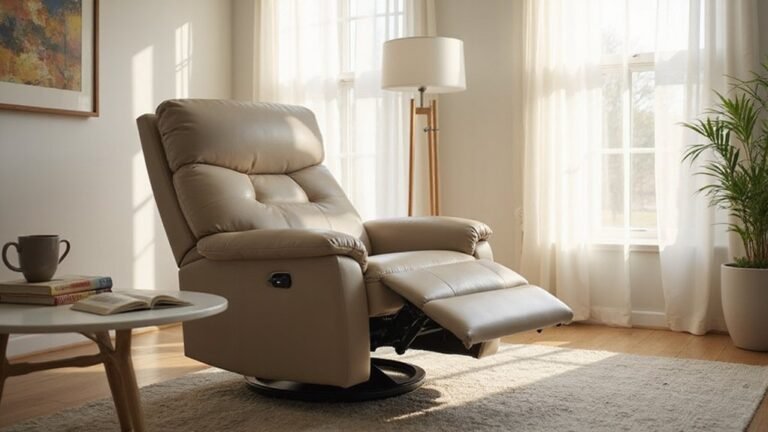
Premium Leather – Soft & Lasting: Crafted from high-quality, soft genuine leather, this pushback recliner offers a smooth and comfortable seating experience that only improves with age. The elegant leather upholstery is not only stylish but also easy to wipe clean, making it a long‑lasting, low‑maintenance solution for your home or office.
What Key Patents Defined the Recliner’s Core Features?
Patents played a crucial role in defining the core features of the recliner, with key innovations secured well before La-Z-Boy’s model. Early conceptual roots can be traced to 19th-century furniture, such as the French military bed from 1850. However, the fundamental mechanical innovations emerged through formal patents. Cousins Knabush and Shoemaker patented a wooden bench recliner in the late 1920s, establishing a direct link to modern recliners. Their 1930 patent for an upholstered version with side levers introduced the assisted recline mechanism. In 1947, they further improved the design by patenting an integrated footrest, making it a standard feature. The most significant innovation came in 1959 when Daniel Caldemeyer patented the “rocket recliner,” which used kinetic mechanisms inspired by his Air Force experience. This design enhanced the speed and reliability of the recliner’s movement, facilitating widespread adoption in homes. Each of these patents contributed specific core features, such as the assisted recline system, integrated footrest, and dynamic mechanism, shaping the modern recliner’s functionality and user experience. Maintaining these patented recliner mechanisms over time often involves checking for loose hardware and worn components like tension springs, while concealing the back of a modern reclining sofa often requires creative decor solutions.
Why Did the “Reclina-Rocker” Become a 1960s Sensation?
The “Reclina-Rocker” became a 1960s sensation because it combined innovative design with effective marketing to appeal to a broad audience. It was the first chair to integrate a built-in ottoman with a smooth, silent rocker, offering a level of comfort that set it apart. Its spring-driven mechanism provided automatic reclining with just a simple flick of your hand, ensuring effortless adjustment and continuous back support. This feature made it attractive not only to families looking for comfort but also to hospitals seeking reliable seating for patients. This pursuit of comfort marked a dramatic shift from centuries past, when most households lacked soft chairs.
Strategic branding played a significant role, with names like “La-Z-Boy” cementing its identity. Endorsements from popular stars further enhanced its reputation and desirability. Its modern aesthetic, coupled with available leather upholstery, elevated its style, transforming it from a regional product into a nationally recognized symbol of relaxation. As a result, the Reclina-Rocker drove revenue growth over 2,500 percent in just a decade, fueled by its combination of comfort, functionality, and stylish appeal.
How Have Modern Recliner Designs Adapted to Contemporary Tastes?
Modern recliner designs have evolved to align with contemporary tastes by emphasizing style, functionality, and health benefits. You’ll find options featuring clean mid-century modern lines and neutral color palettes that hide dirt and keep your space looking stylish. Many models now incorporate space-saving features like wall-hugger mechanisms, allowing you to position the chair close to the wall without sacrificing comfort. Modular units also enable versatile arrangements in multi-purpose rooms, adapting to changing needs.
Built-in tech features, such as USB charging ports, are now standard, blending convenience seamlessly into the design. This shift from purely functional upholstery to more sophisticated, cultural seating elevates the recliner’s role in your home. Health-focused innovations like zero-gravity positioning and smart cushions that contour to your body are common, ensuring both comfort and support. Manufacturers carefully select durable, stain-resistant fabrics to combine practicality with sophisticated aesthetics, resulting in recliners that are as beautiful as they are comfortable and health-conscious.

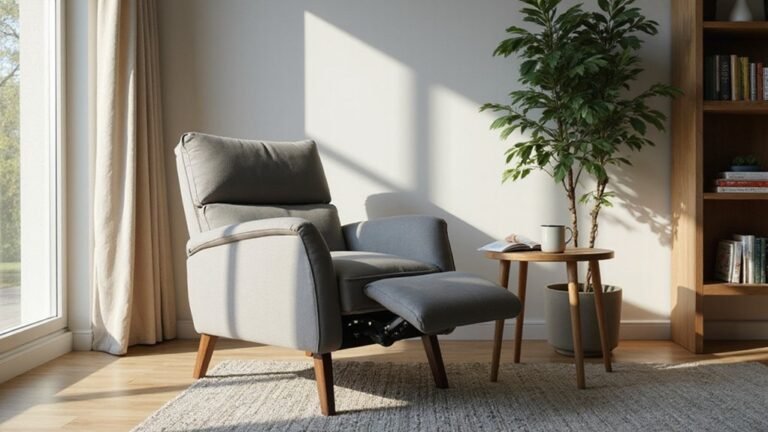
Mid-Century Modern Design: With clean lines, a sleek wooden base, and sheepskin-finish fabric, this chair enhances your living room with timeless mid-century modern elegance.

𝐓𝐡𝐢𝐬 𝐋𝐚𝐳𝐲 𝐁𝐨𝐲 𝐑𝐞𝐜𝐥𝐢𝐧𝐞𝐫 𝐂𝐡𝐚𝐢𝐫 𝐑𝐞𝐥𝐚𝐱𝐚𝐭𝐢𝐨𝐧 𝐑𝐞𝐝𝐞𝐟𝐢𝐧𝐞𝐝 - Experience comfort in our wingback push back recliner chair with armchair with extended footrest. Effortlessly lean back, pop out the footrest, and unwind – perfect for movie nights, napping, or getting lost in a good book.

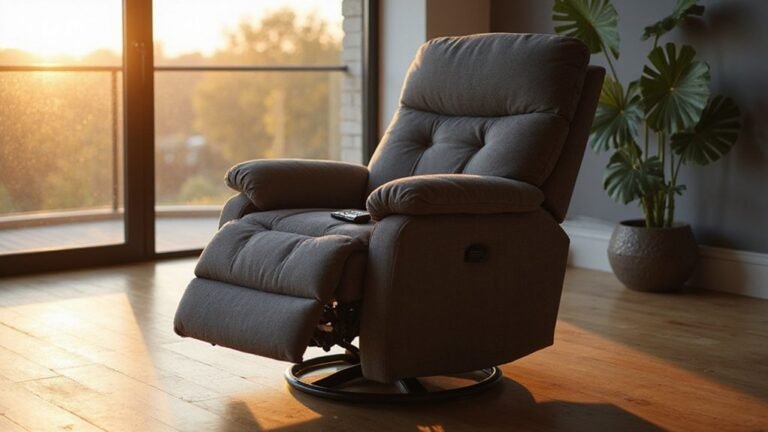
Multi-functional Power Recliner Chair: This versatile power recliner combines 270° swivel, 30° rocking, reclining, vibration massage, and lumbar heating functions for total relaxation. With USB and Type-C ports, side pockets, and a tufted high back, it provides both style and comfort in any setting. After a tiring day or week at work, let our cozy rocker recliner accompanies you on busy workdays and lazy weekend